38 articles
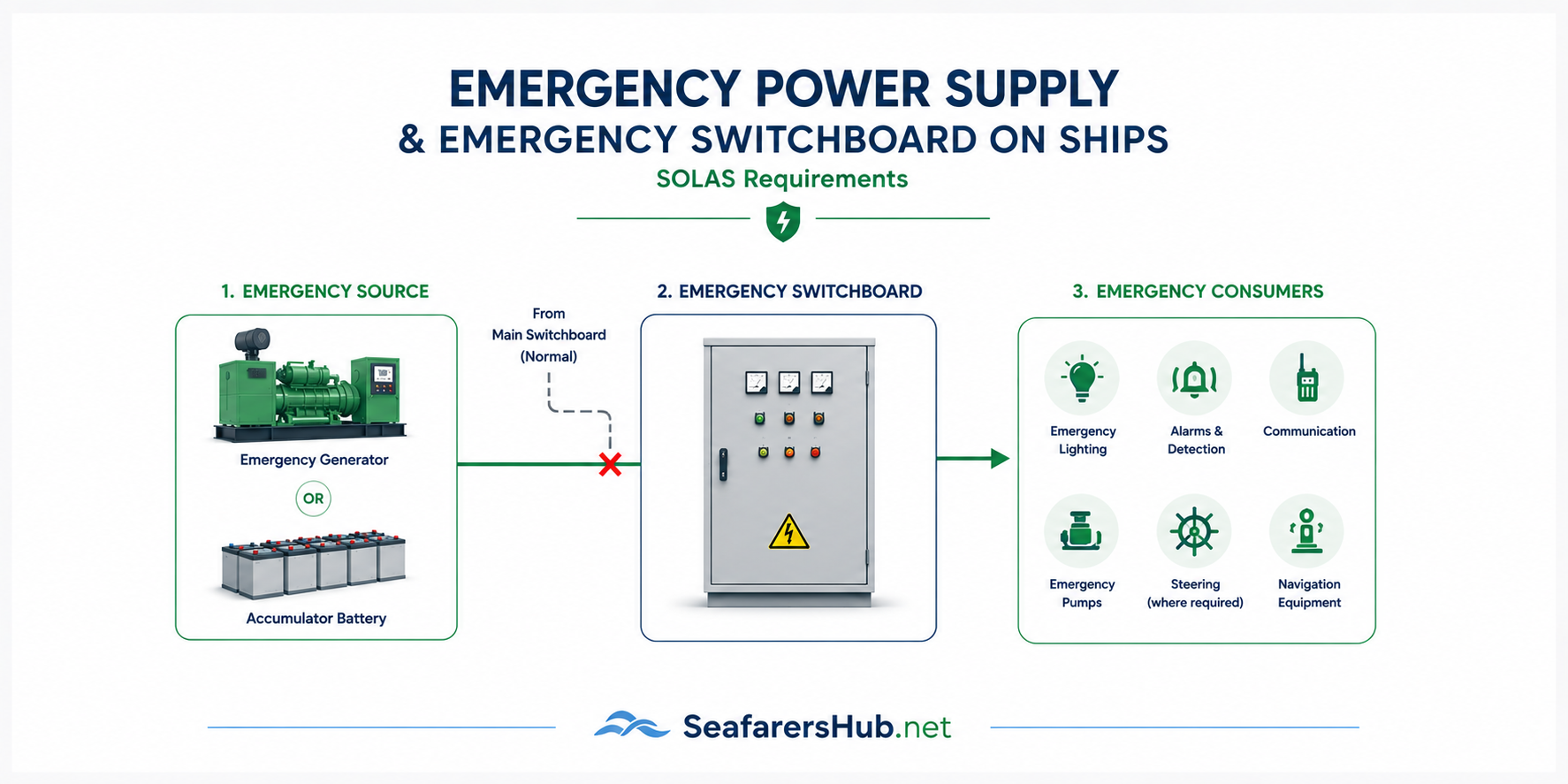
Learn how emergency power supply and the emergency switchboard keep essential shipboard safety services operating when the main electrical power supply fails.
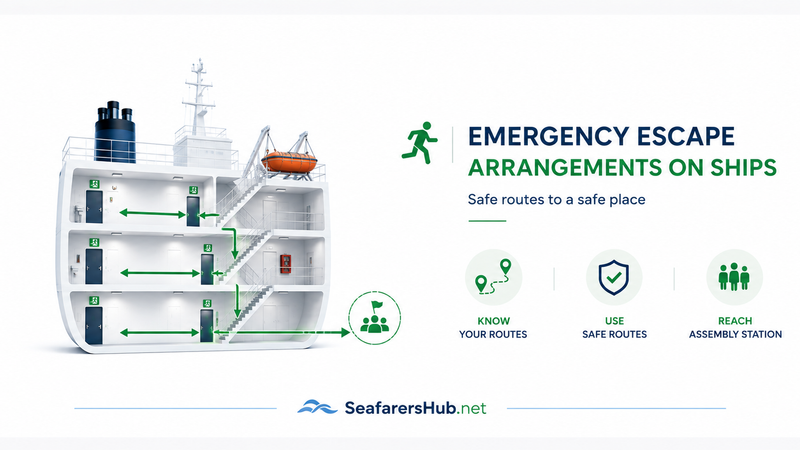
Learn how emergency escape arrangements on ships provide safe routes from machinery, accommodation, and other spaces, including key SOLAS requirements and EEBD provisions.
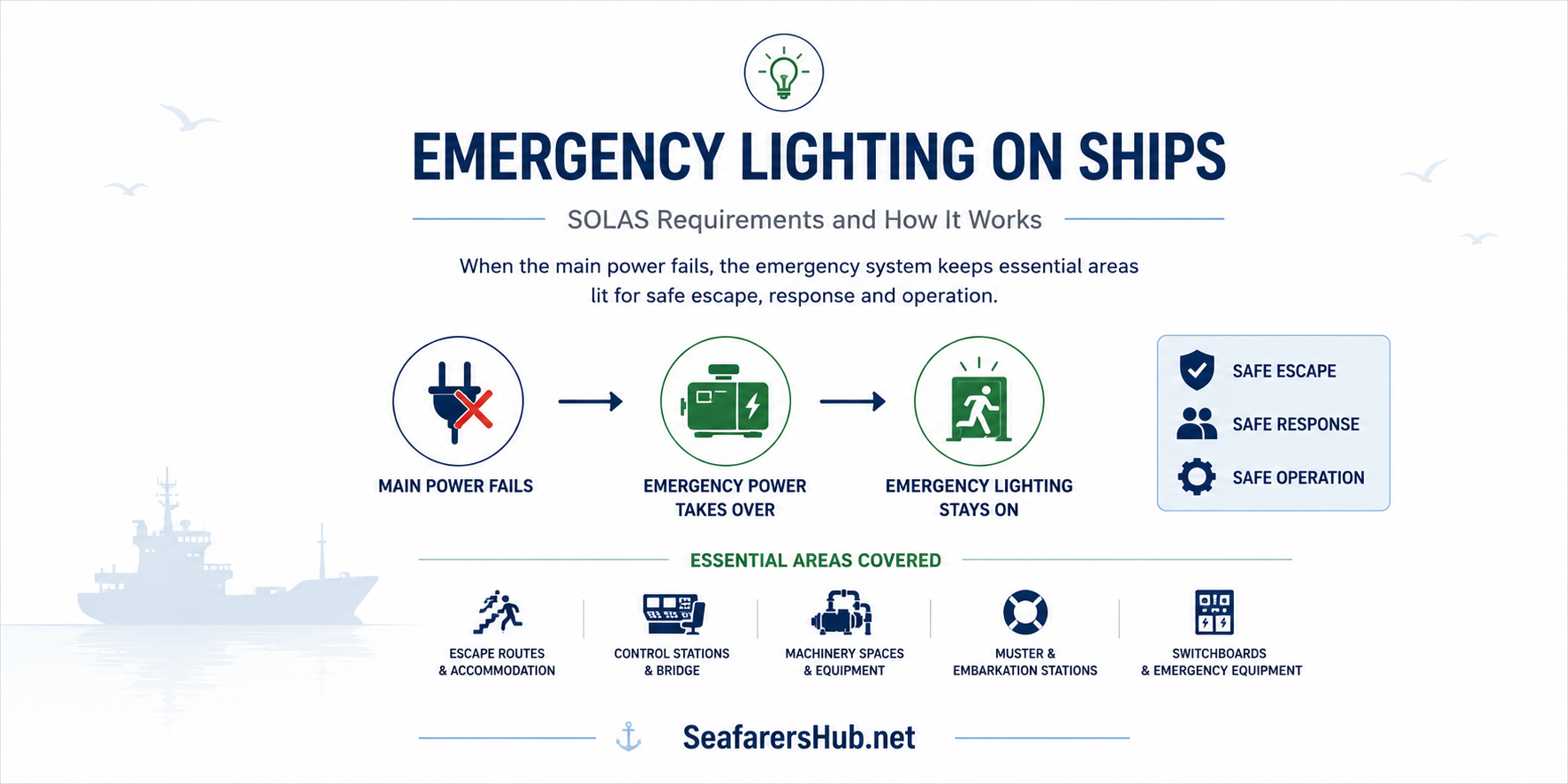
Learn how emergency lighting on ships provides essential illumination during a blackout, including key SOLAS requirements for passenger and cargo ships.
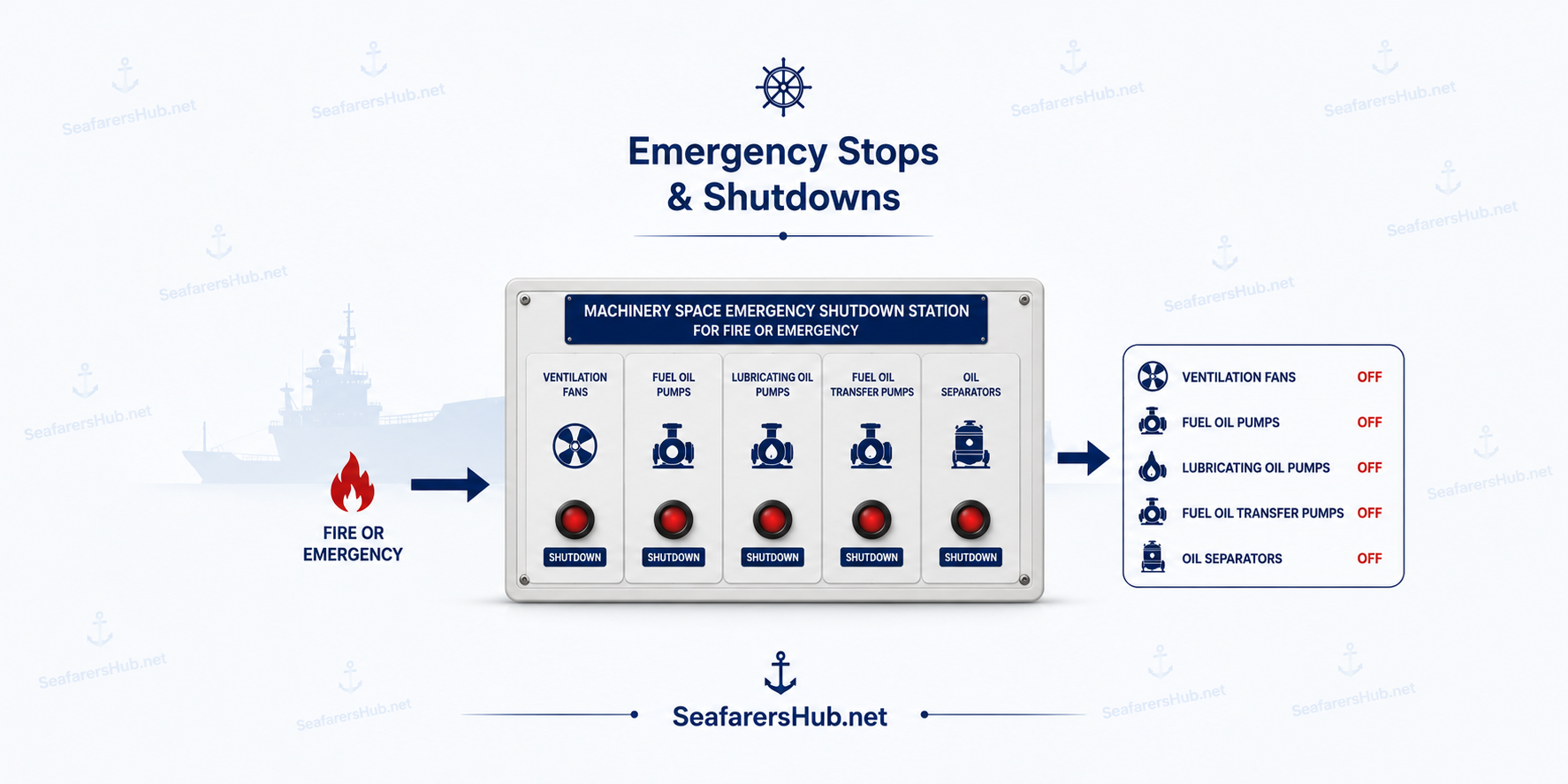
Learn how emergency stops and shutdowns help control machinery-space fires by remotely stopping ventilation fans, fuel-oil pumps, lubricating-oil pumps, and other specified equipment under SOLAS requirements.
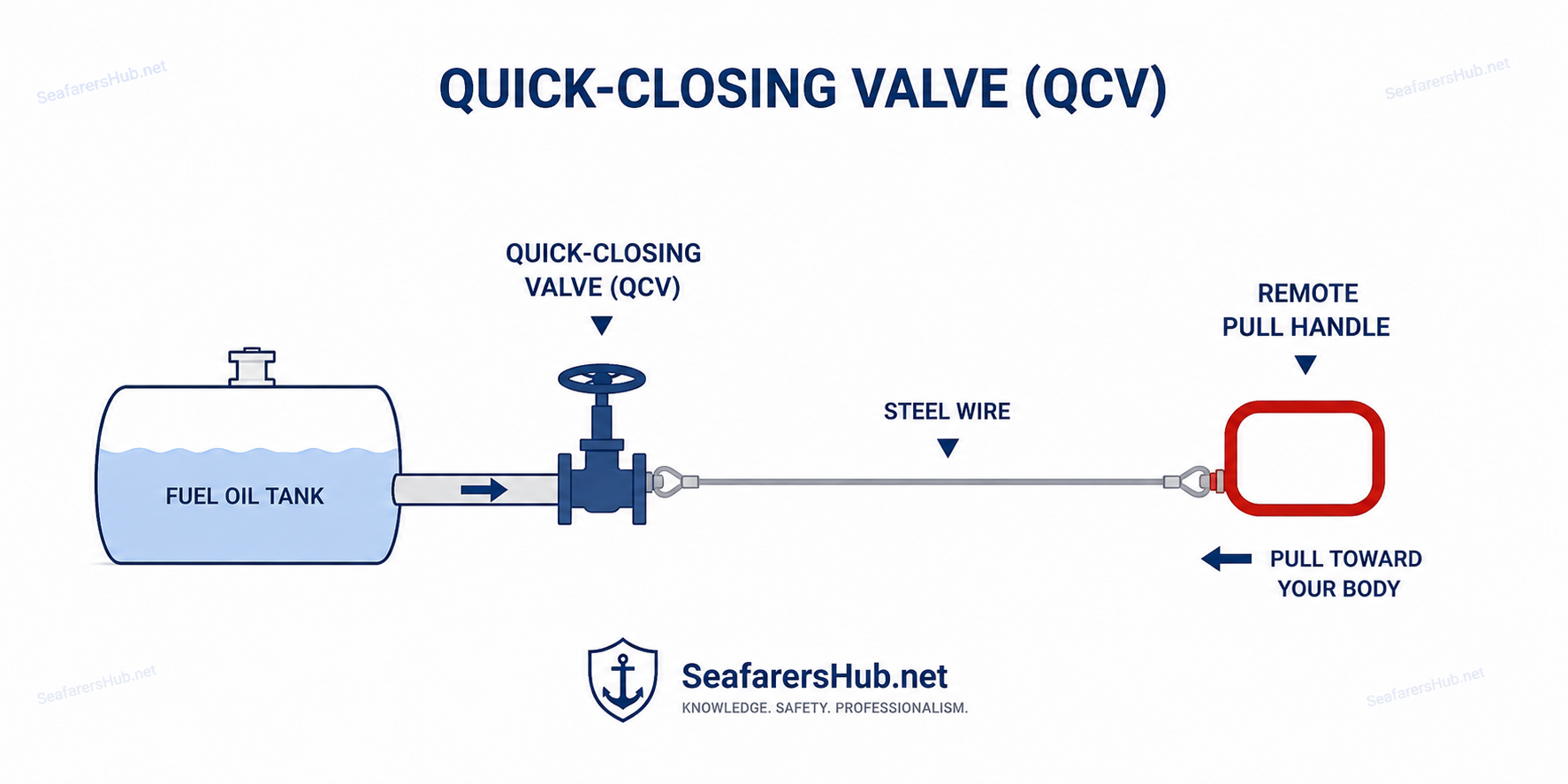
Learn how quick-closing valves protect ships by remotely isolating fuel during emergencies, including their purpose, operation, and key SOLAS requirements.
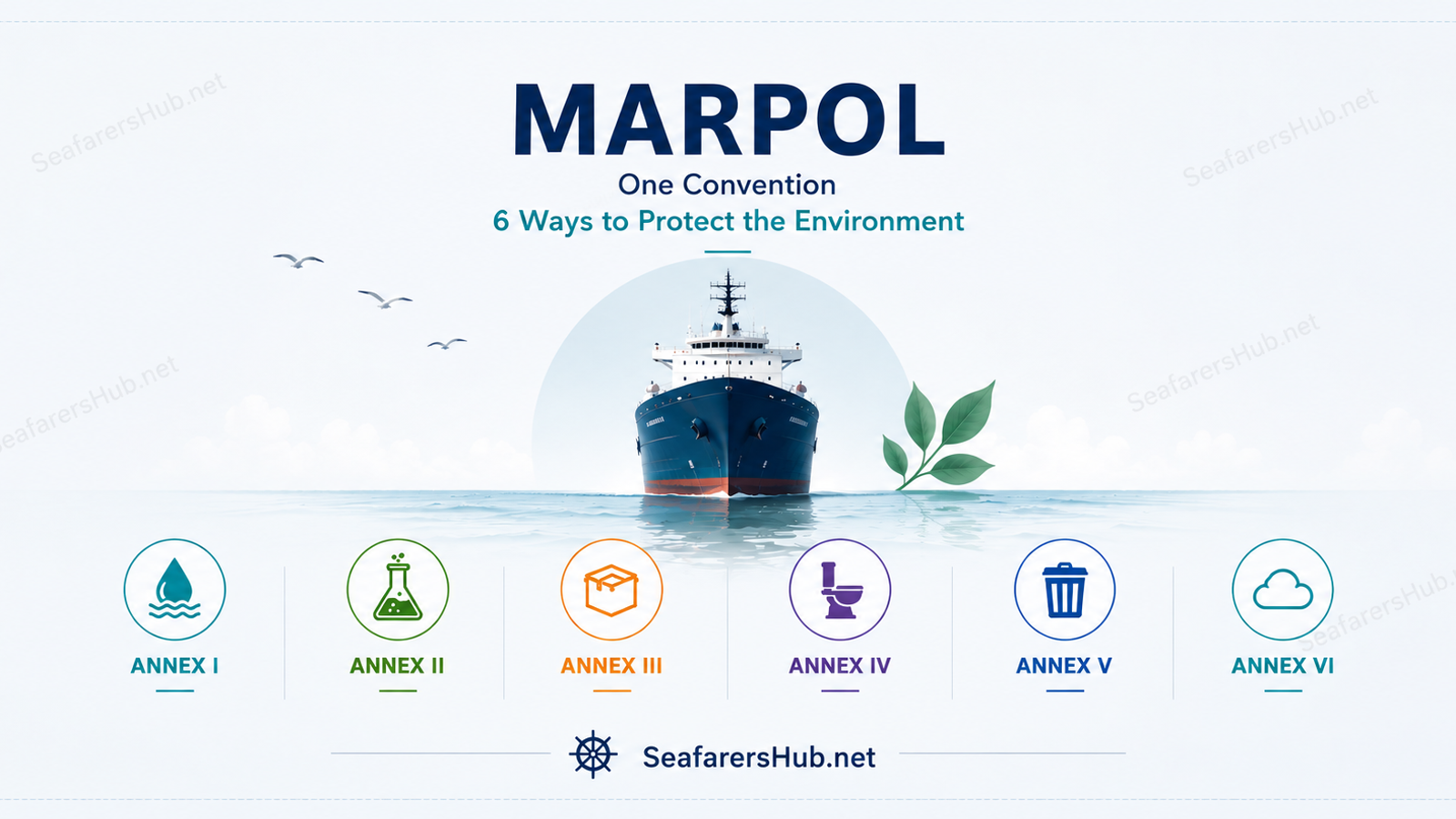
Discover MARPOL and its six Annexes covering oil, chemicals, harmful packaged substances, sewage, garbage, and air pollution from ships.
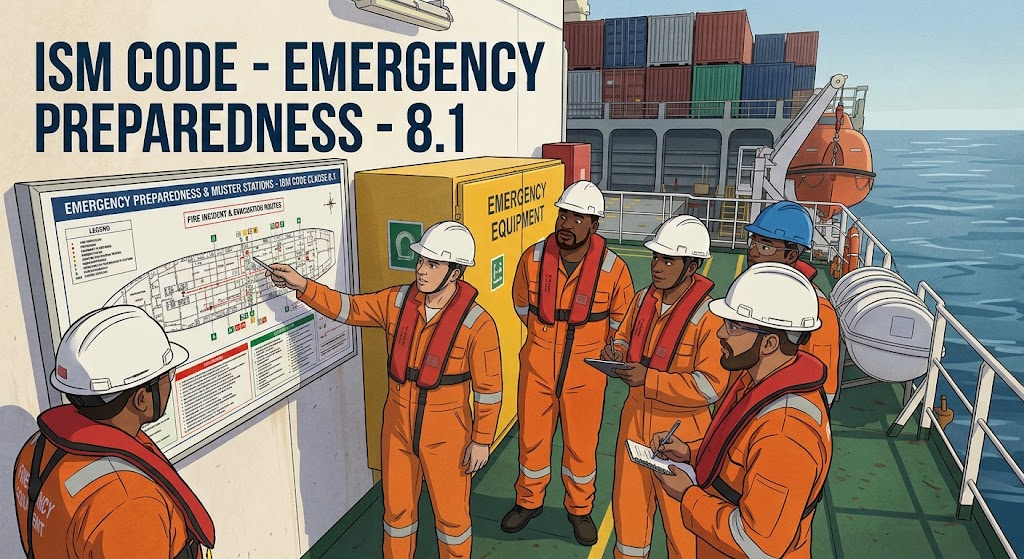
Clause 8.1 of the ISM Code requires shipping companies to identify potential emergency situations on board and establish clear procedures to respond to them. This obligation ensures that emergencies such as fire, flooding, collision, machinery failure, pollution incidents and medical emergencies are addressed through planned action rather than improvised decisions. Effective procedures define responsibilities, communication routes, immediate safety measures and coordination between the vessel and shore management. By integrating risk assessment, crew training, drills and continual review into the Safety Management System
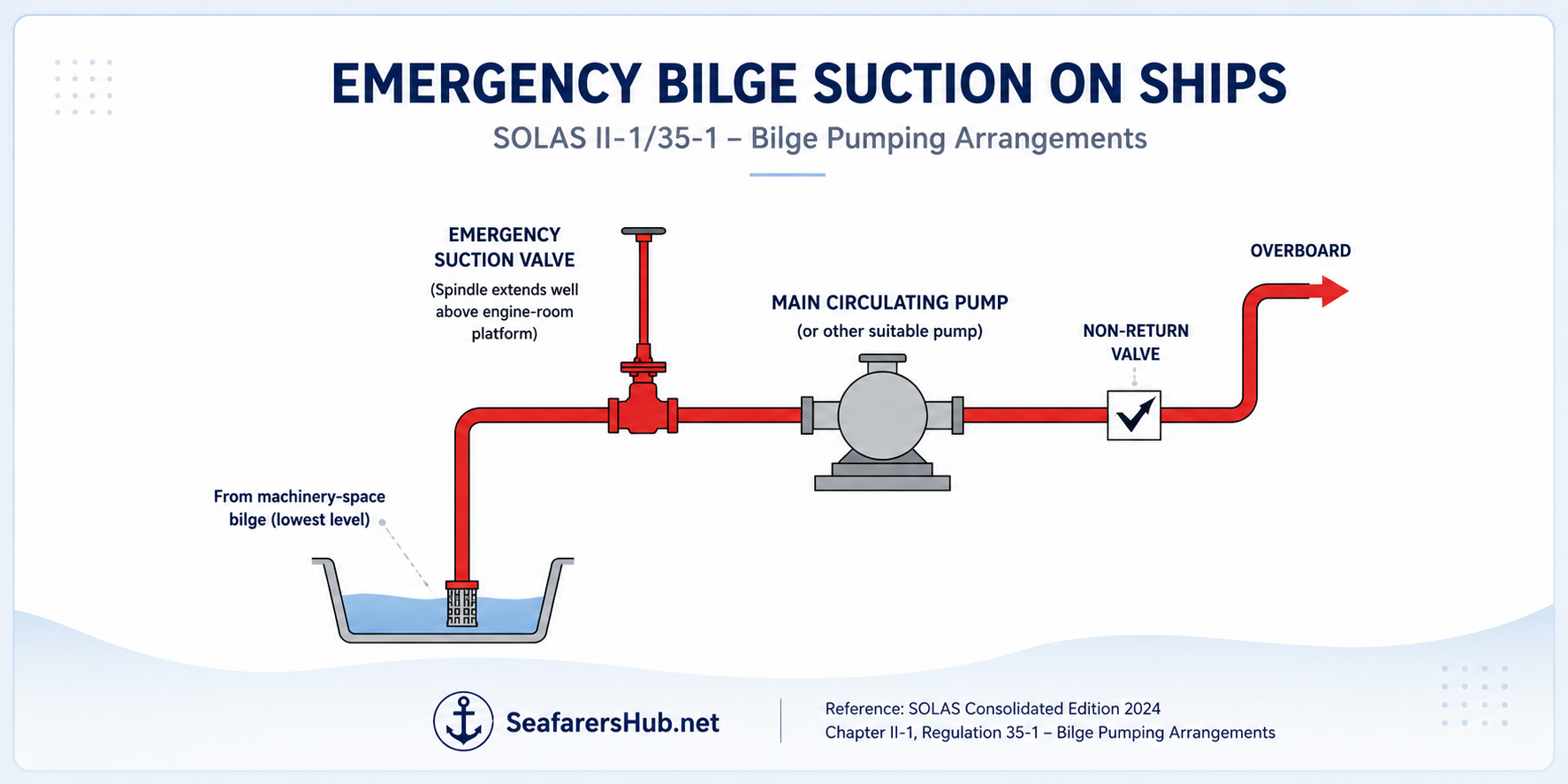
Learn how emergency bilge suction removes large quantities of water from machinery spaces, including key SOLAS requirements, pump arrangements, and safe operation.
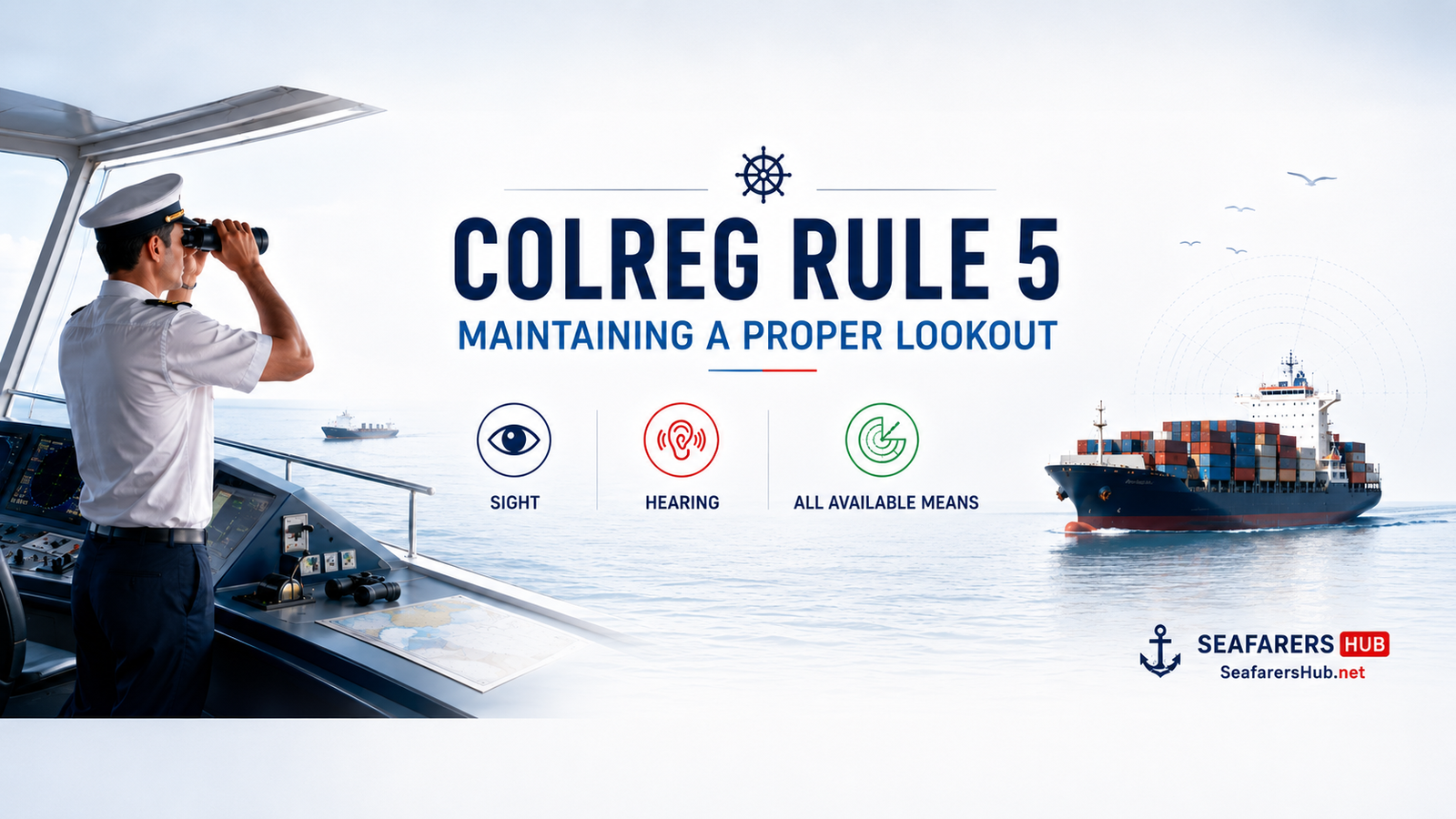
A professional examination of COLREG Rule 5, explaining how sight, hearing, radar and other available means must be combined to maintain situational awareness and detect collision risk early.
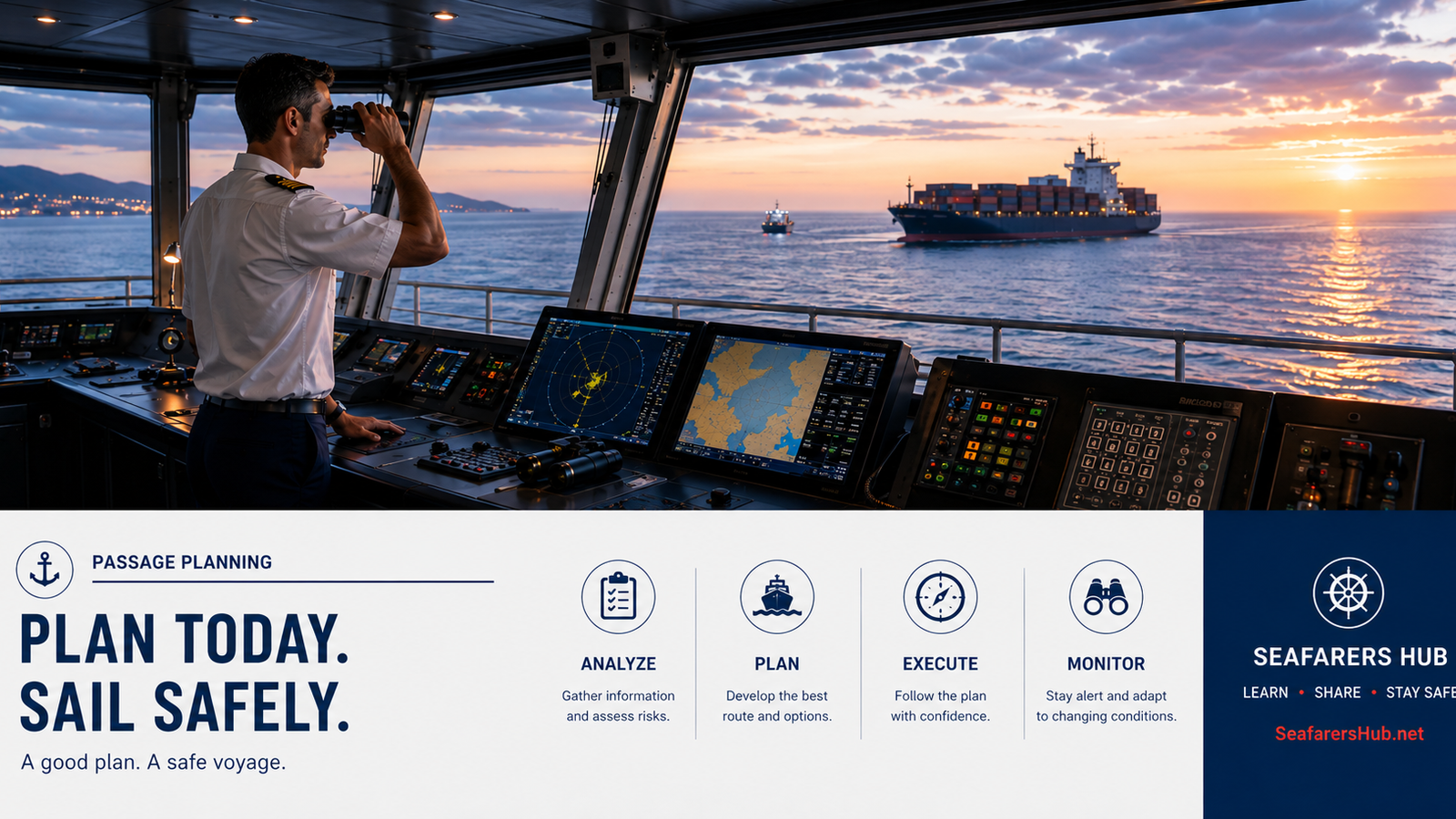
A professional overview of berth-to-berth passage planning, explaining how appraisal, planning, execution and monitoring work together to support safe navigation.
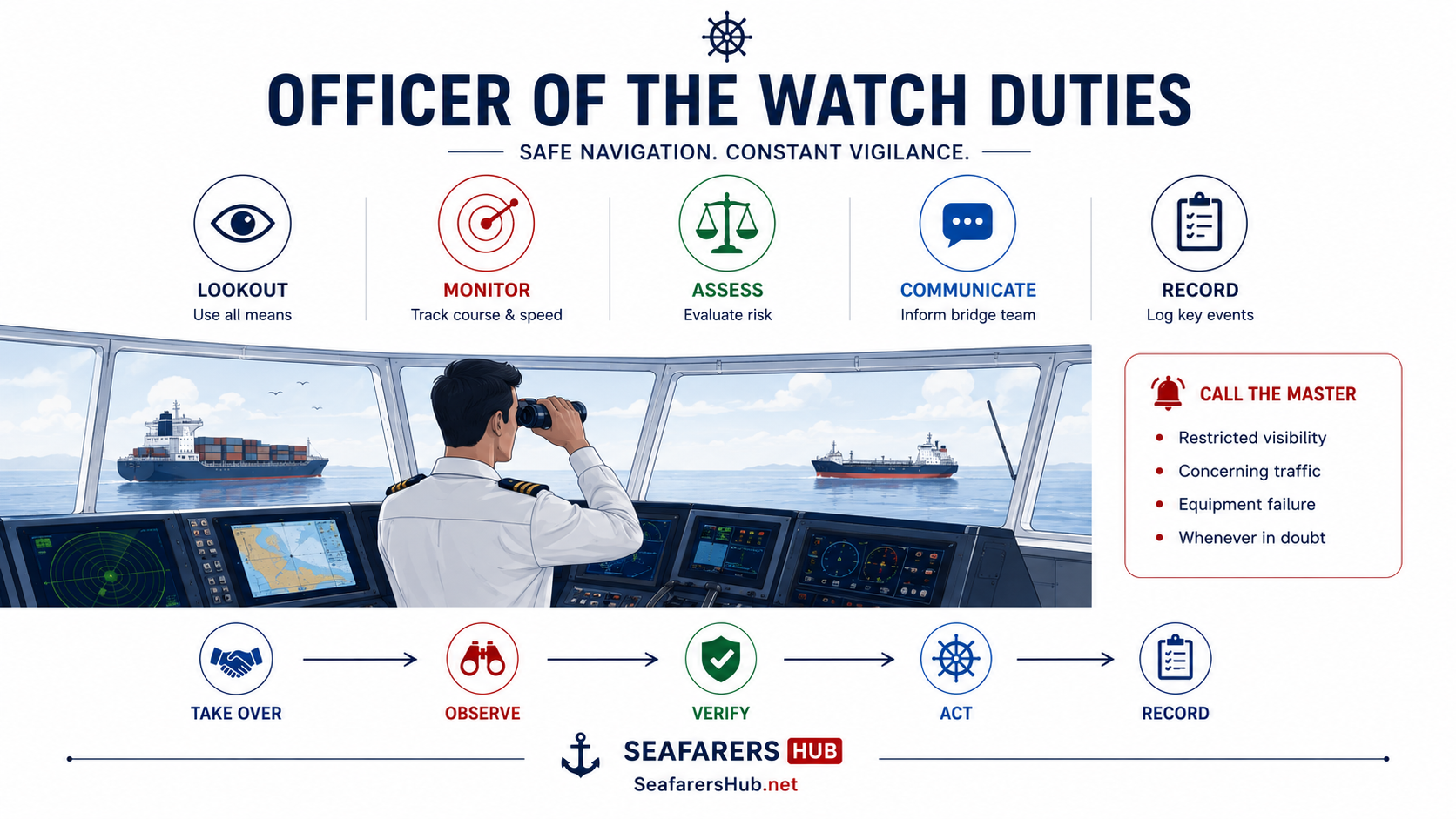
The Officer of the Watch is the Master’s representative during the navigational watch, responsible for safe navigation, collision avoidance, passage monitoring, bridge equipment and timely escalation when conditions become unsafe.
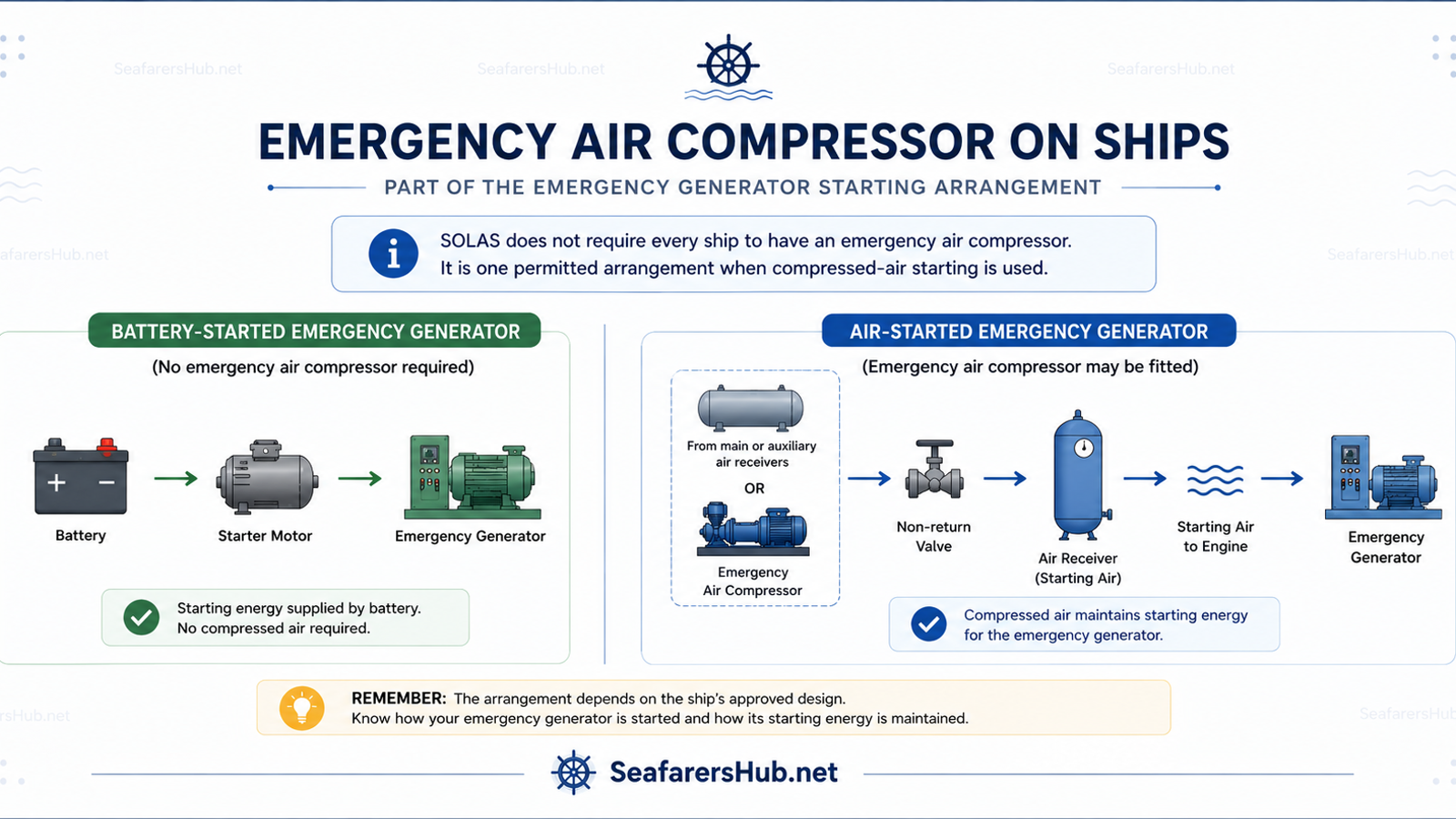
Learn how emergency air compressors support shipboard starting-air systems, emergency generator starting and dead-ship recovery, with key SOLAS requirements.