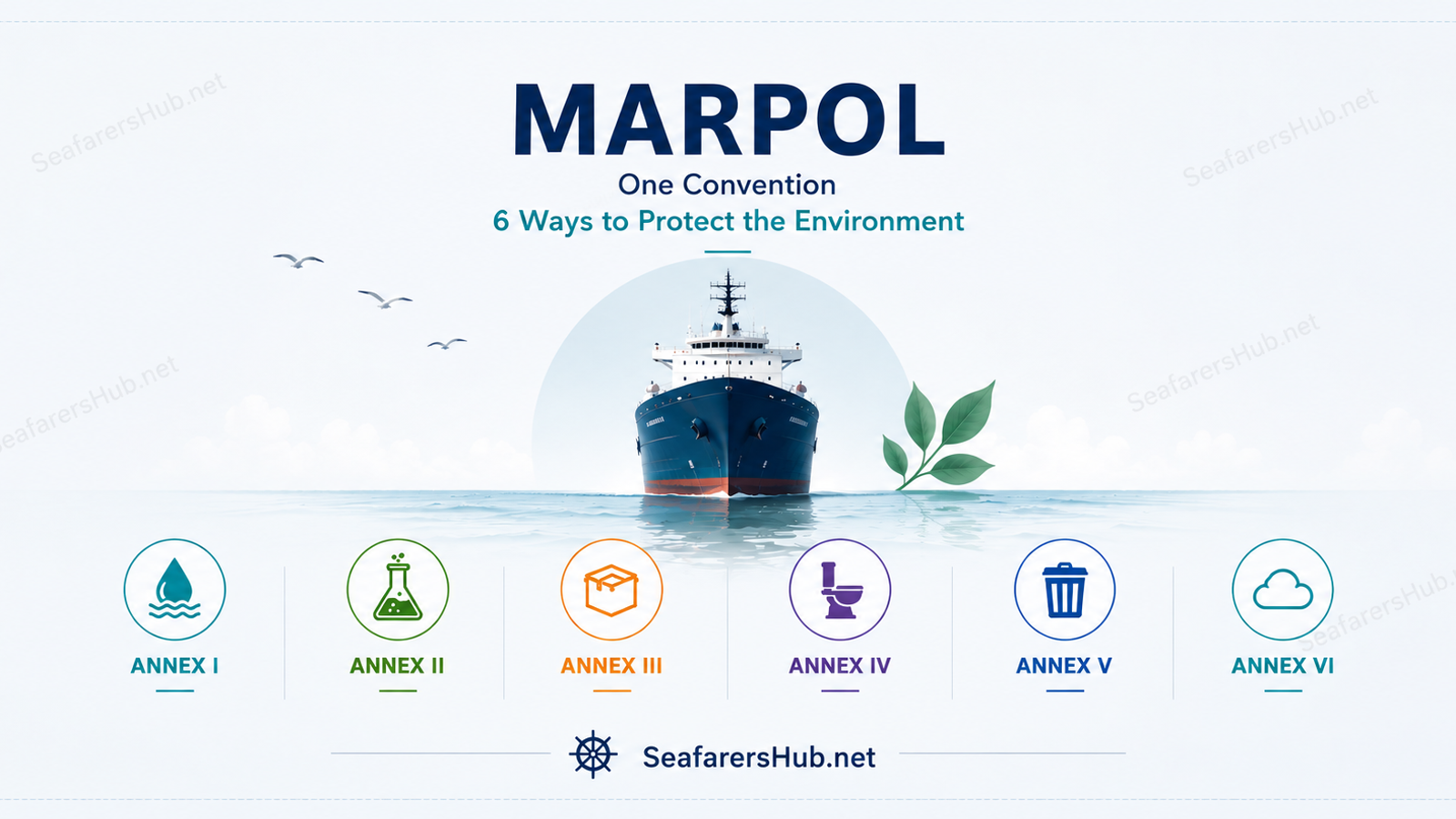
What Is MARPOL? A Guide to the Six Annexes
The International Convention for the Prevention of Pollution from Ships (MARPOL) is the main international convention for preventing pollution of the marine environment from ships.
MARPOL addresses pollution resulting from both routine ship operations and accidental causes. It contains six technical Annexes, each dealing with a different type of marine pollution.
The Six MARPOL Annexes
Annex I – Pollution by Oil
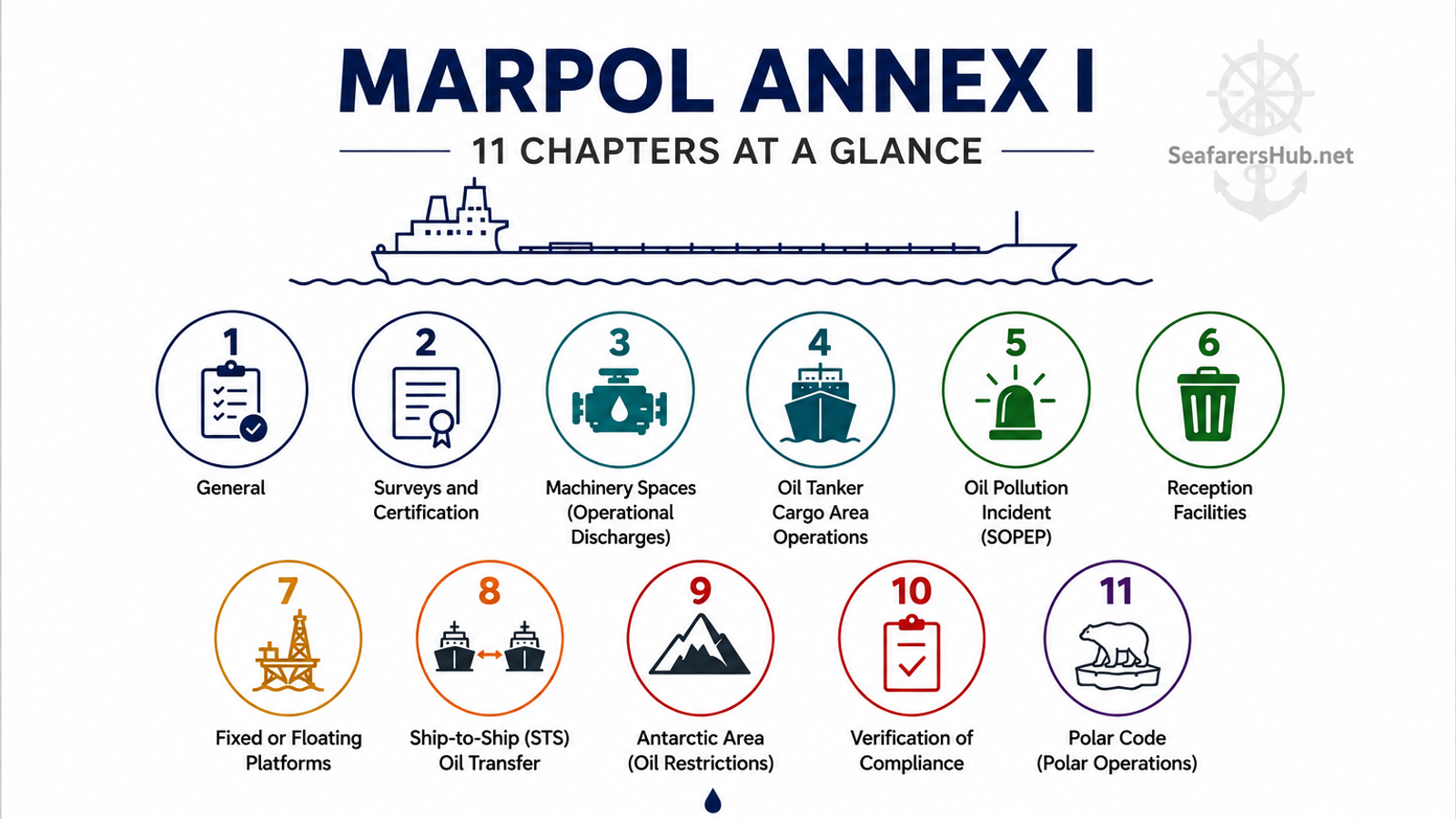
MARPOL Annex I deals with the prevention of pollution by oil. It covers areas such as machinery-space bilges, oily residues and sludge, oil filtering equipment, the 15-ppm standard, Oil Record Books, tanker operations and the Shipboard Oil Pollution Emergency Plan (SOPEP).
For marine engineers, Annex I is particularly important because many of its requirements are part of everyday engine-room operations.
Learn more about: Key MARPOL Annex I Requirements Every Seafarer Should Know | SeafarersHub
Annex II – Noxious Liquid Substances in Bulk
MARPOL Annex II regulates pollution by noxious liquid substances (NLS) carried in bulk.
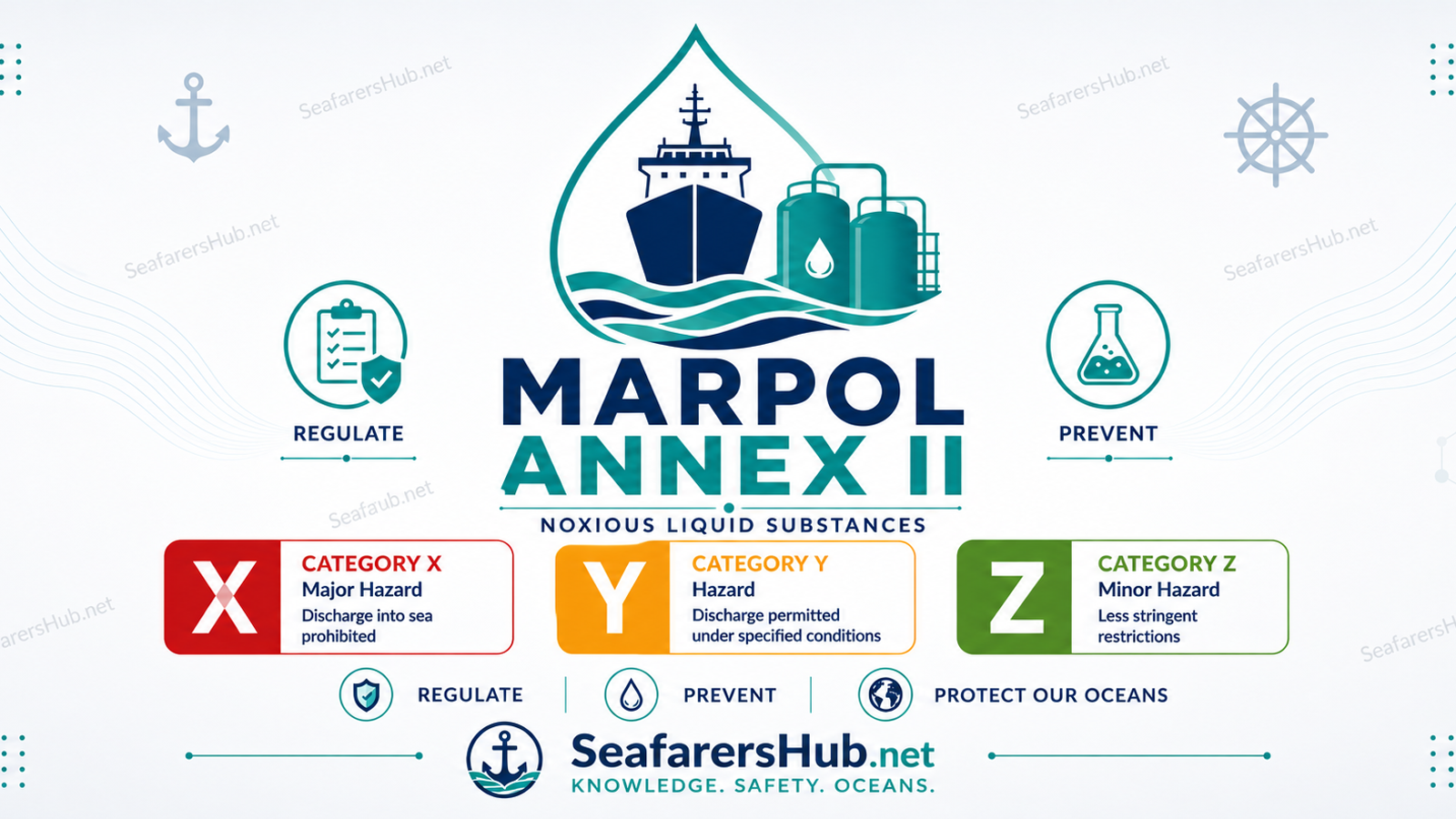
It classifies substances mainly into Categories X, Y and Z according to their pollution hazard and establishes requirements for cargo handling, tank cleaning, stripping, prewashing, residue disposal and record keeping.
Learn more about: MARPOL Annex II: Guide to Noxious Liquid Substances | SeafarersHub
Annex III – Harmful Substances in Packaged Form
MARPOL Annex III deals with harmful substances transported by sea in packaged form.
It works closely with the International Maritime Dangerous Goods (IMDG) Code and covers packing, marking, labelling, documentation, stowage and other measures intended to prevent marine pollution.
Learn more about: MARPOL Annex III: Harmful Substances in Packaged Form | SeafarersHub