
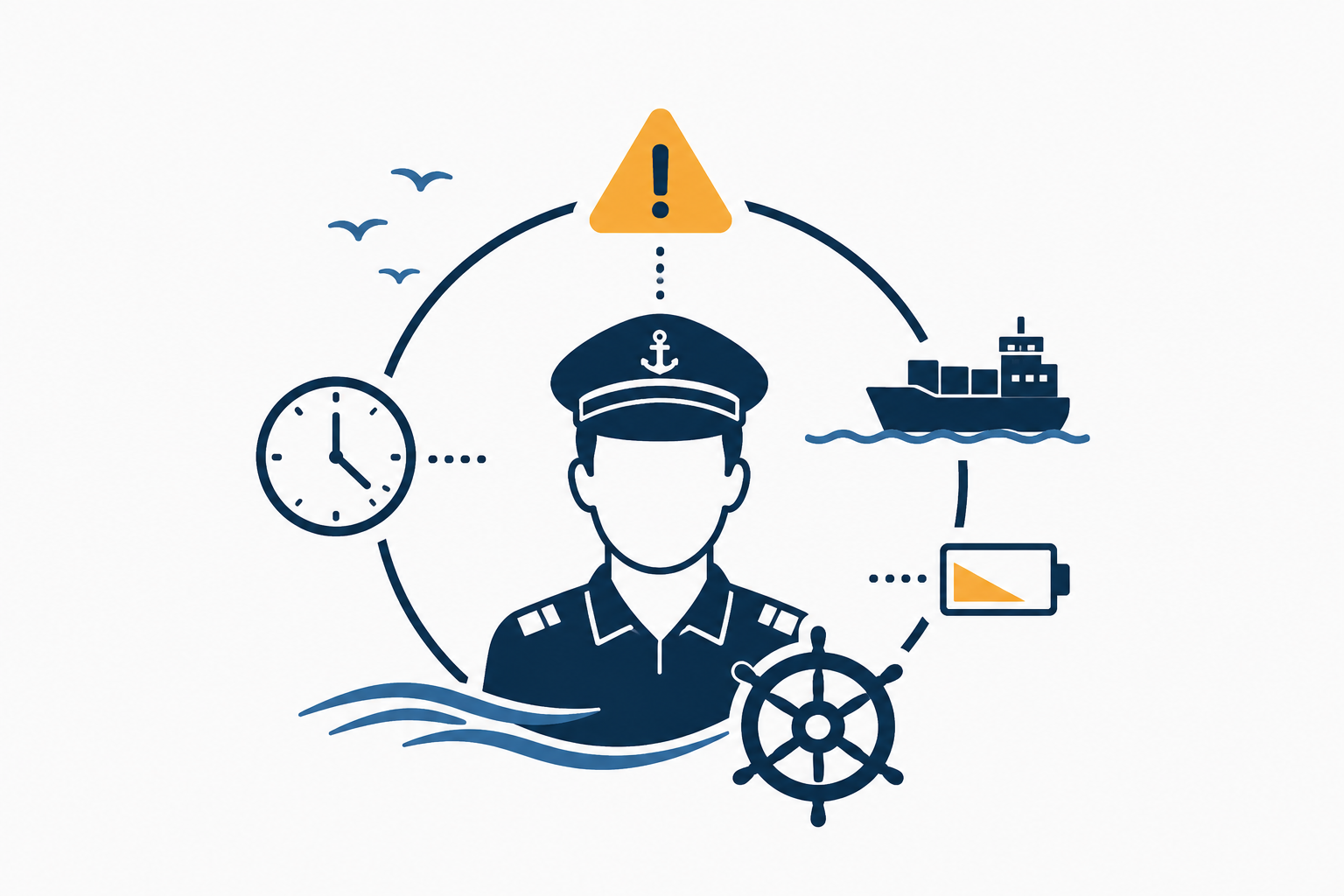
Seafarer Fatigue: The Silent Threat Behind Maritime Accidents
Every safe voyage begins with a well-rested crew.
Seafarer fatigue is one of the leading causes of human error in the maritime industry. Long working hours, irregular watch schedules, inadequate rest, and demanding operational conditions can significantly reduce alertness and increase the risk of accidents at sea. Managing fatigue is therefore essential for protecting lives, ships, cargo, and the marine environment.
Common Causes of Seafarer Fatigue
Several factors contribute to fatigue at sea. Watchkeeping systems, particularly those involving night shifts, disrupt the body's natural sleep cycle and often prevent seafarers from obtaining sufficient, high-quality sleep. Noise, vibration, vessel motion, extreme weather, and frequent port operations further reduce sleep quality.
Long working hours, high workloads, and limited opportunities for recovery make fatigue even more common, particularly on short-sea voyages where port calls are frequent.
Impact on Maritime Safety
The consequences of fatigue extend far beyond temporary tiredness. Fatigued seafarers may struggle to maintain situational awareness, increasing the risk of navigation errors, machinery failures, and accidents during critical operations.
Studies have also linked chronic fatigue to long-term health problems, including cardiovascular disease, metabolic disorders, weakened immune function, and mental health challenges.
Fatigue Prevention and Management
Fatigue is not only an individual concern but also an operational and organizational issue. Effective fatigue management requires cooperation between shipping companies, ship management teams, and crew members.
Compliance with international work and rest hour requirements, adequate manning levels, realistic work schedules, and a strong safety culture all play important roles in reducing fatigue-related risks.
Seafarers can also take practical steps to manage fatigue by prioritizing quality sleep, maintaining a healthy diet, staying hydrated, engaging in regular physical activity, and reporting excessive fatigue to supervisors. Even small improvements in sleep hygiene and workload planning can significantly improve alertness and operational performance.
Conclusion
As global shipping continues to grow, addressing fatigue remains essential for protecting lives, safeguarding the marine environment, and ensuring safe and efficient maritime operations.