The International Convention for the Safety of Life at Sea (SOLAS). Explore SOLAS chapters, amendments, IMO regulations, safety requirements, ship construction standards, fire protection, life-saving appliances, navigation safety, surveys, inspections, and practical guidance for seafarers and maritime professionals.
10 articles
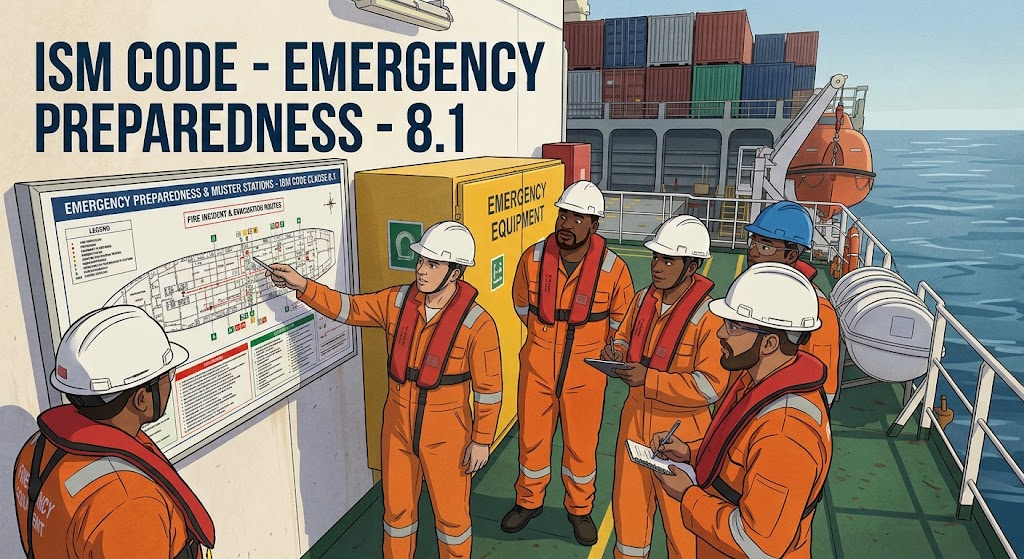
Clause 8.1 of the ISM Code requires shipping companies to identify potential emergency situations on board and establish clear procedures to respond to them. This obligation ensures that emergencies such as fire, flooding, collision, machinery failure, pollution incidents and medical emergencies are addressed through planned action rather than improvised decisions. Effective procedures define responsibilities, communication routes, immediate safety measures and coordination between the vessel and shore management. By integrating risk assessment, crew training, drills and continual review into the Safety Management System
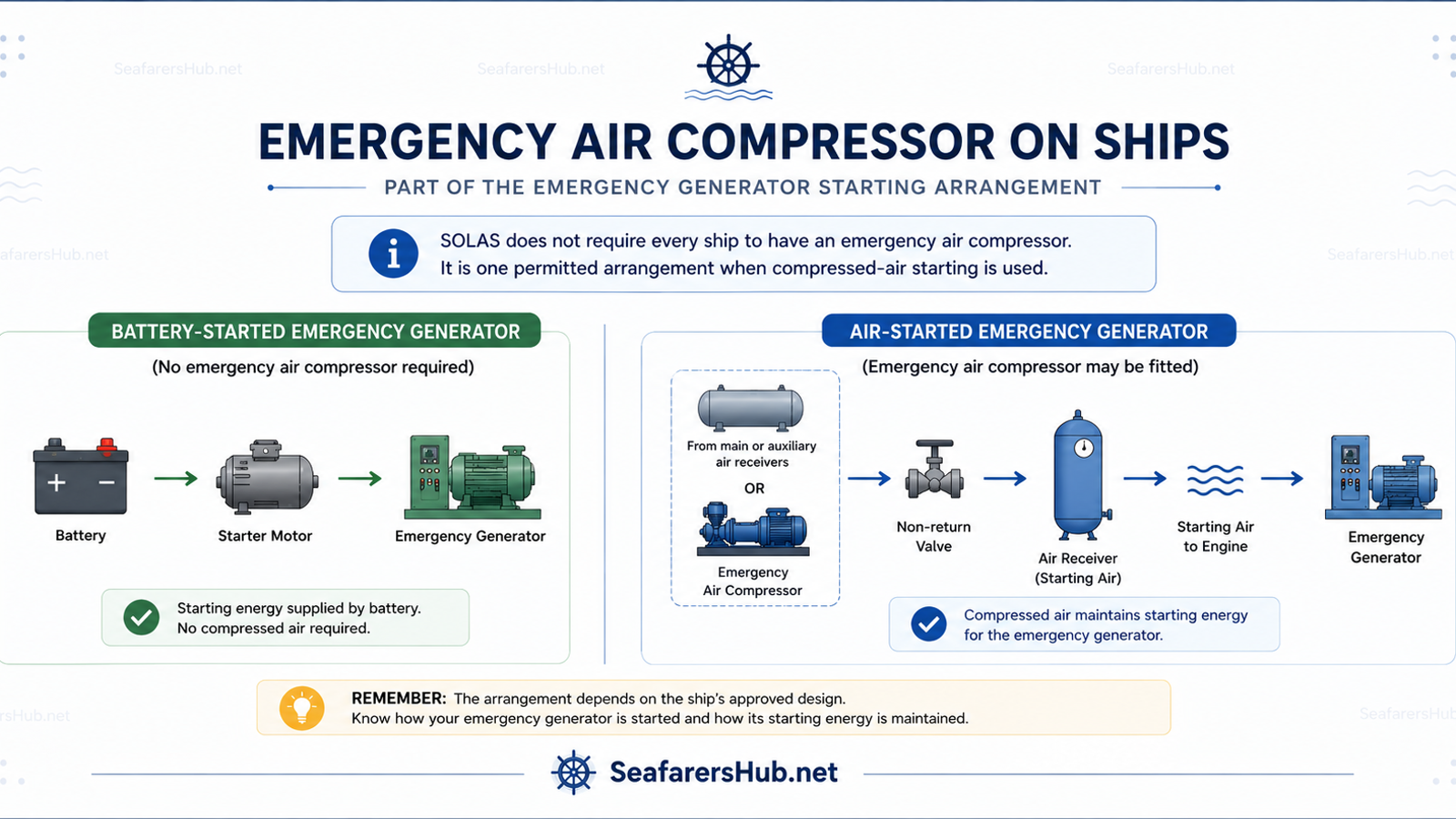
Learn how emergency air compressors support shipboard starting-air systems, emergency generator starting and dead-ship recovery, with key SOLAS requirements.
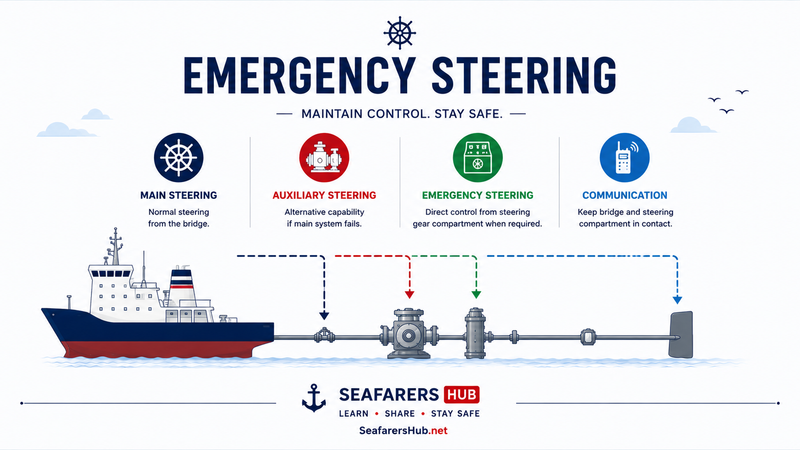
Learn how emergency steering works on ships, including main and auxiliary steering gear, local emergency control, bridge communication, SOLAS requirements, testing, and emergency steering drills.
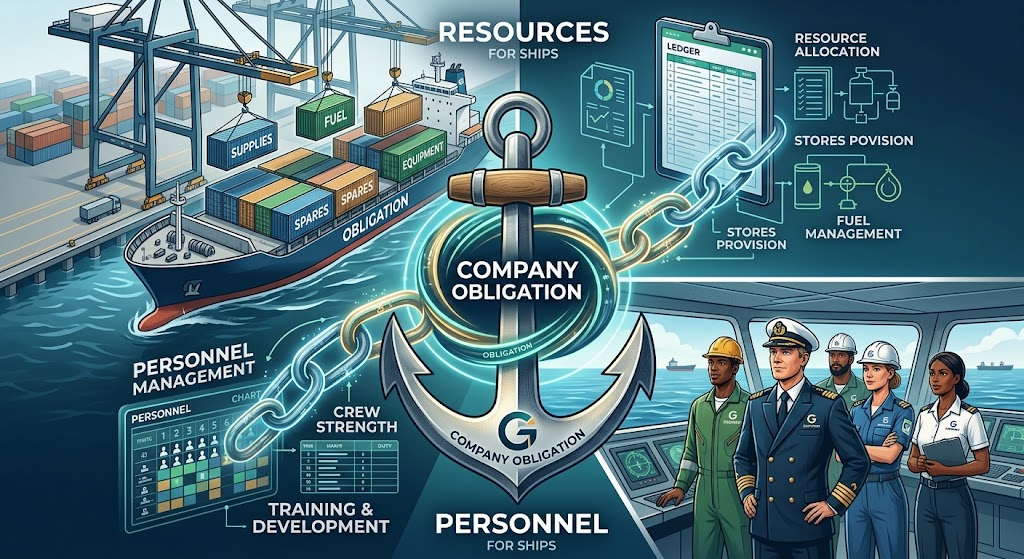
Clause 3.3 of the ISM Code requires shipping companies to provide adequate resources and shore-based support so that the Designated Person Ashore can perform safety and pollution-prevention duties effectively. This support includes qualified personnel, technical expertise, emergency assistance, communication systems, training, financial resources, and direct access to senior management
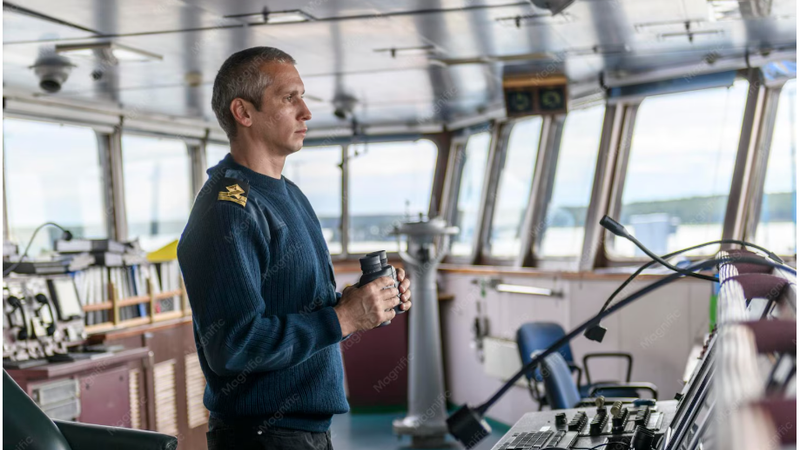
The Master’s Overriding Authority is a fundamental safety principle under paragraph 5.2 of the ISM Code. It ensures that the master has both the right and the responsibility to make final decisions when the safety of people, the ship, cargo, or the marine environment may be at risk.
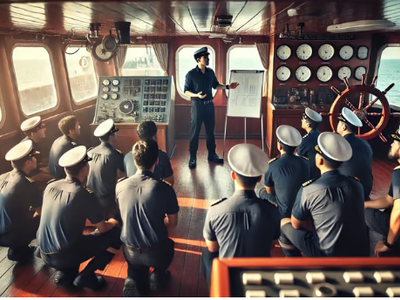
This article is intended to highlight and stress on the importance of the role of DPA to provide real support, resources and convenience to operate the ship safely, rather than the DPA act as "Policing" the relationship. This concept will be in lign with the ISM-Code principle of "No-blame" culture to ship's crew.
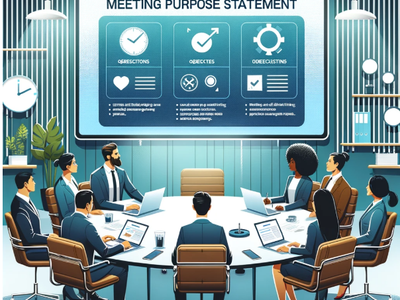
This article sheds a bright light on the fact that without full support of fleet top management, the ISM-Code and shipboard staff will stand stranded onboard, and just have the extra load of "baby-sitting" the code

An overview to decide whether the ISM-Code itself was not efficient to make a substantial rise in maritime safety or if the maritime society failed to embrace the code and sustain its demands
Learn how the SOLAS Convention became the foundation of modern maritime safety. Explore its history, key chapters, regulatory requirements, and why every seafarer and maritime professional should understand its role in safe ship operations.
Learn what STCW is, why it matters, and how it sets international standards for the training, certification, and watchkeeping of seafarers around the world.