
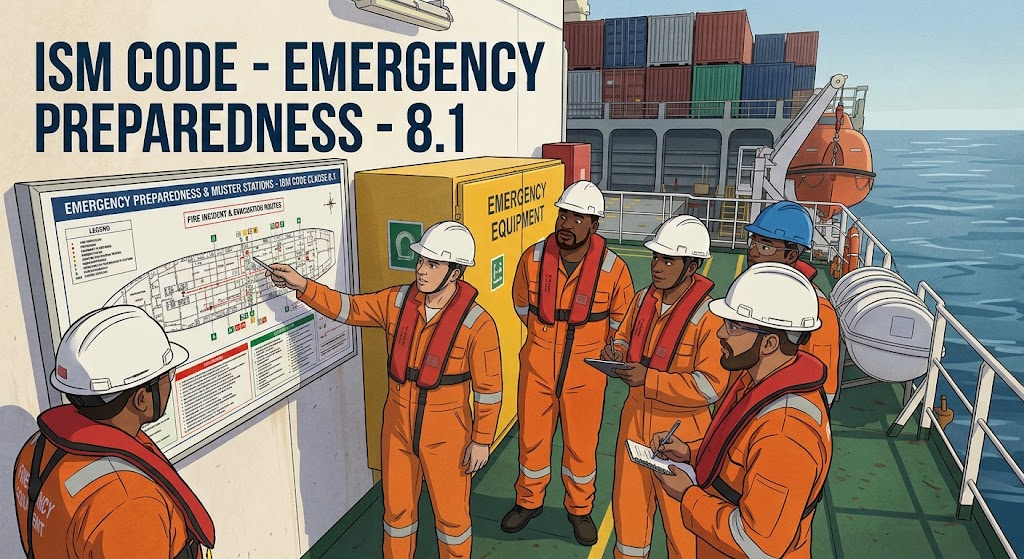
Clause 8.1 of the ISM-Code states: “The Company should identify potential emergency shipboard situations, and establish procedures to respond to them.” Though concise, this requirement is fundamental to the safe operation of a ship. It transforms emergency response from an improvised reaction into a planned, trained and controlled process designed to protect life, the vessel, cargo and the marine environment.
In the above context, clause 8.1 places a clear responsibility on the Company—not only the crew on board—to anticipate what could go wrong and ensure that a practical response system is in place. The term “Company” includes the shipowner or the organization that has assumed responsibility for operating the ship. This makes emergency preparedness a shared shipboard-and-shore responsibility, rather than an issue left solely to the Master and crew.
Potential emergencies vary according to vessel type, trade, cargo, operating area, equipment and weather exposure. A chemical tanker, for example, faces hazards very different from those of a bulk carrier, offshore-support vessel or passenger ship. The Company must therefore avoid a generic, copy-and-paste emergency manual.
Safety Management System (SMS) should reflect the actual risks of each vessel and provide the crew with procedures that are clear, relevant and usable under pressure.
The first responsibility under clause 8.1 is systematic identification of possible emergency situations. This should be based on risk assessment, accident and near-miss records, lessons learned from other vessels, manufacturers’ instructions, statutory requirements and the experience of seafarers. The process should include both events that occur frequently and events that are unlikely but may have severe consequences.
Typical emergency situations to be identified include:
- Fire or explosion in accommodation spaces, machinery spaces, cargo areas or galleys.
- Collision, grounding, contact damage or loss of steering.
- Flooding, hull damage or progressive loss of stability.
- Main-engine failure, blackout or loss of critical machinery.
- Man overboard, serious injury, medical emergency or death on board.
- Oil spill, chemical release or dangerous-goods incident.
- Heavy-weather damage, cargo shift or structural failure.
- Piracy, armed robbery, stowaway incidents or security threats.
- Failure of navigation, communication or cyber-dependent operational systems.
The second responsibility is to establish response procedures for each identified emergency. A procedure must answer the essential question: what should people do immediately, who does it, and how is the situation controlled? Emergency instructions should not become lengthy documents that are difficult to use during a crisis. They should be direct, accessible and written in a language understood by the personnel who must apply them.