Quick-Closing Valves on Ships: SOLAS Requirements and How They Work
Quick-closing valves are an important part of a ship’s machinery-space fire-safety arrangements. They allow the crew to stop the flow of fuel oil from certain tanks without entering a space affected by fire.
Their basic purpose is simple: isolate the fuel source and help prevent a machinery-space fire from being continuously fed by oil.
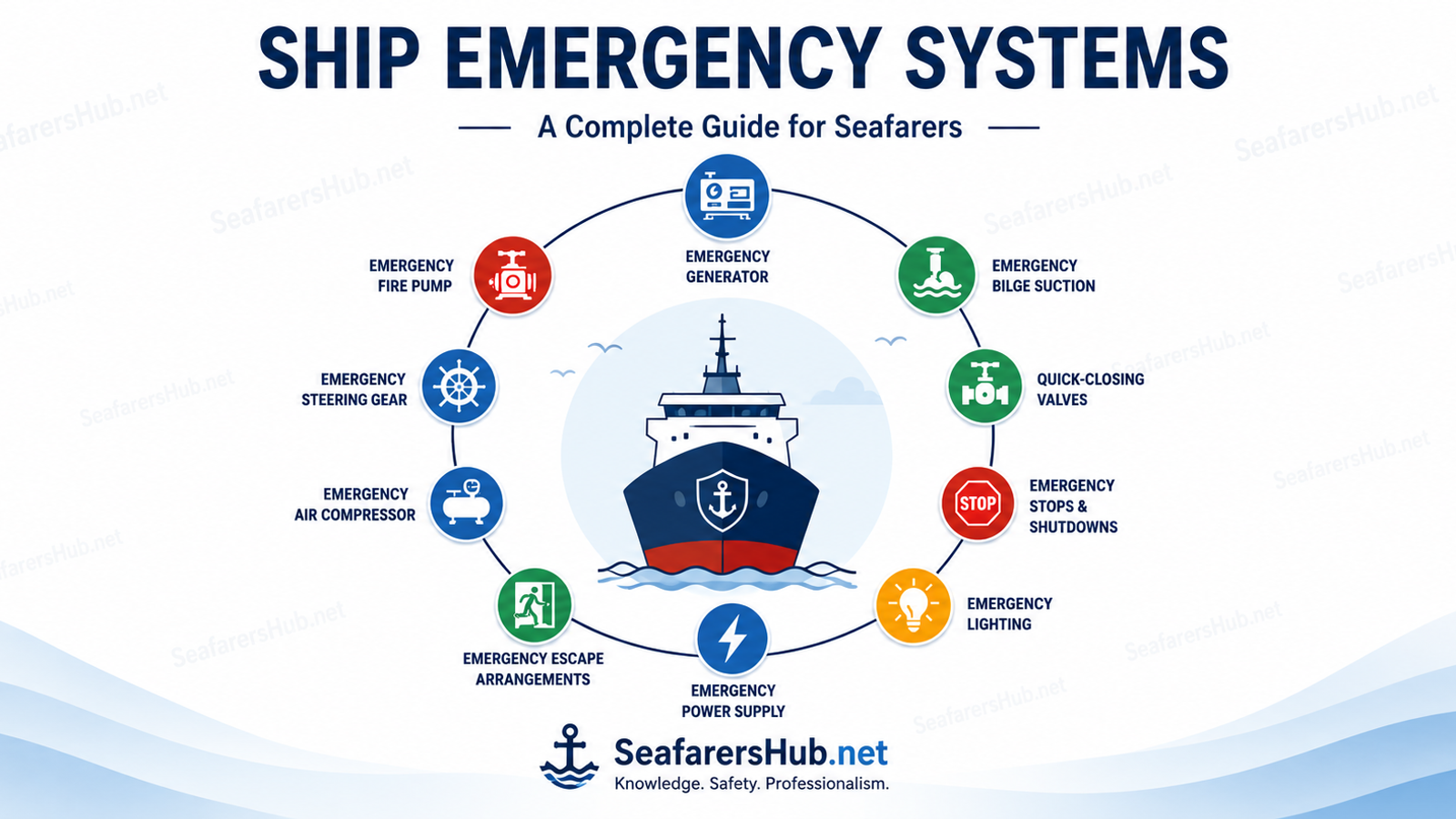
Learn more: Ship Emergency Systems: A Complete Guide for Seafarers | SeafarersHub
What Is a Quick-Closing Valve?
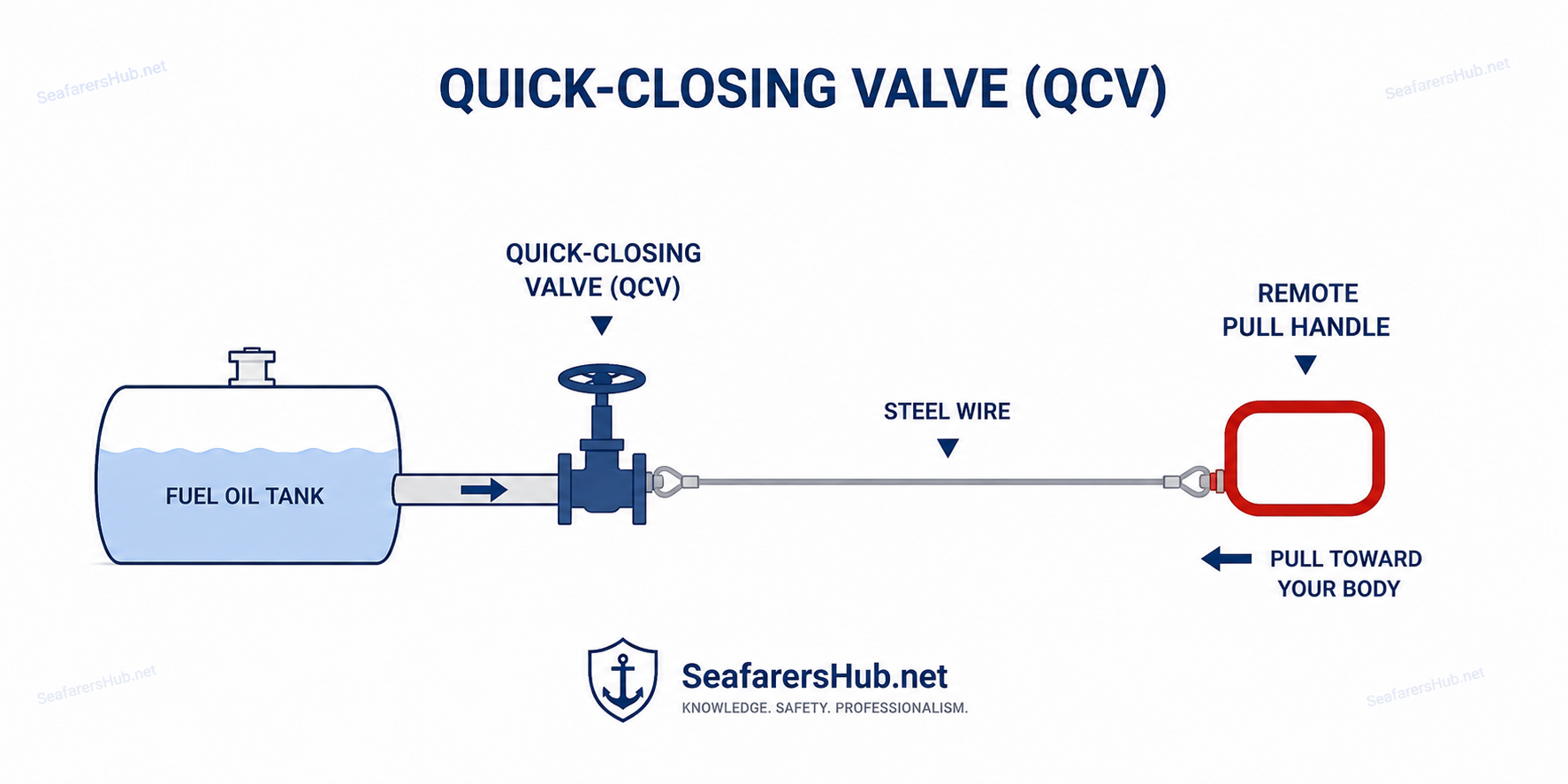
A quick-closing valve is a remotely closable valve or cock fitted directly on the outlet of an applicable oil-fuel tank.
During normal operation, the valve remains open. In an emergency, it can be closed from a safe position outside the affected space, stopping oil from flowing from the tank through the connected piping.
Although commonly called a quick-closing valve (QCV) onboard ship, SOLAS uses the wording “cock or valve” capable of being closed from a safe position.
SOLAS Requirements for Quick-Closing Valves
The principal requirement is found in SOLAS Chapter II-2, Regulation 4.2.2.3.4 – Probability of Ignition.
The requirement applies where damage to an oil-fuel pipe could allow oil to escape from a:
- storage tank;
- settling tank; or
- daily service tank,
having a capacity of 500 litres or above, when the tank is situated above the double bottom.
In this arrangement, a cock or valve must be fitted directly on the tank and must be capable of being closed from a safe position outside the space concerned if a fire occurs.
This distinction is important: SOLAS does not simply require a quick-closing valve on every fuel tank on every ship. Tank capacity, location and piping arrangement determine whether this particular requirement applies.
Why Are Quick-Closing Valves Important?
A damaged fuel pipe can release oil into a machinery space. If the oil reaches hot surfaces or an existing fire, it can significantly increase the severity of the casualty.
A remotely operated shutoff arrangement allows the crew to isolate the affected fuel tank without entering the dangerous space.
The basic emergency principle is:
Fire → Isolate the fuel → Reduce the fire hazard