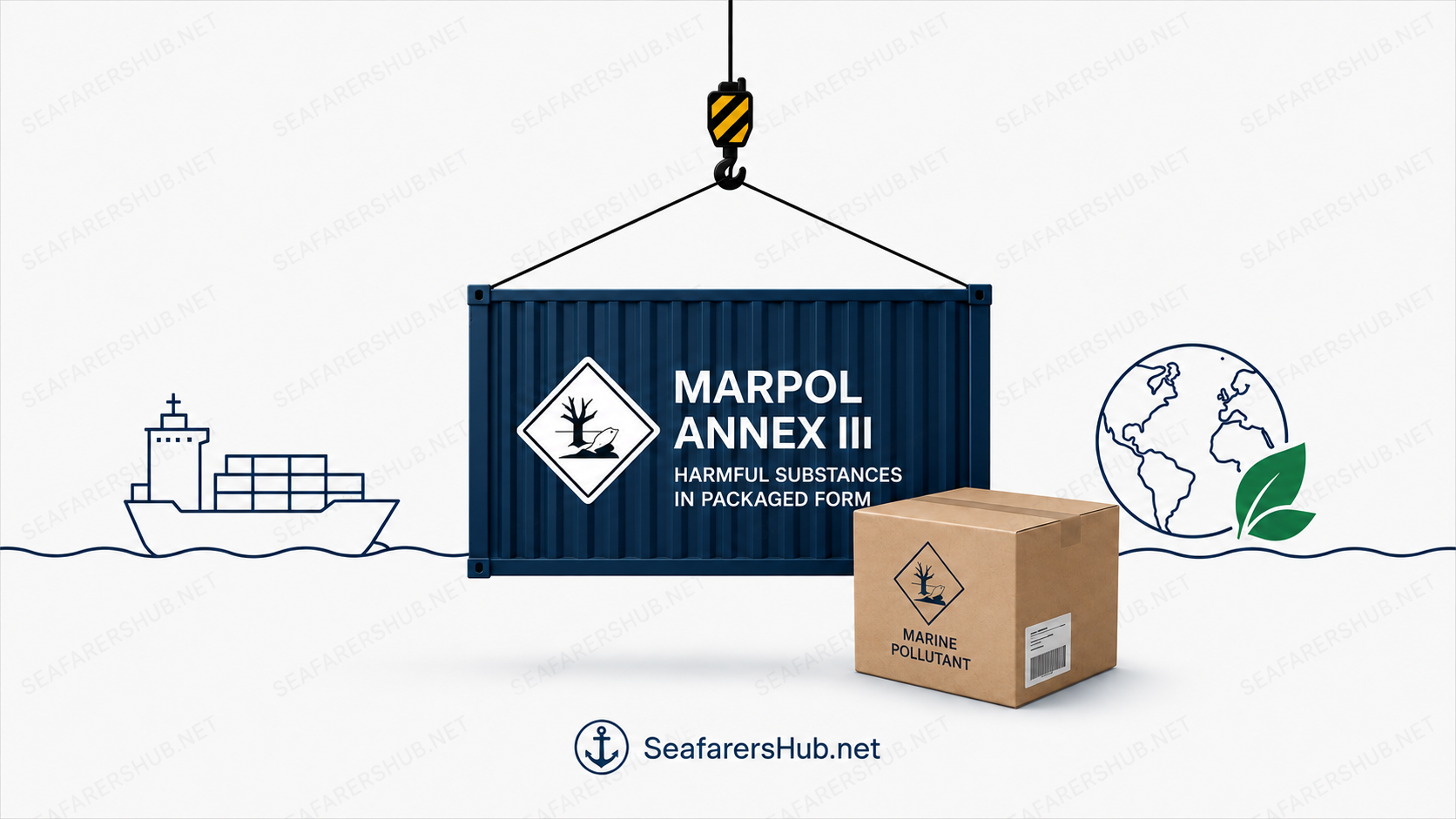
What Is MARPOL Annex III? A Complete Guide to Harmful Substances Carried in Packaged Form
What Is MARPOL Annex III?
MARPOL Annex III contains the international requirements for the prevention of pollution by harmful substances carried by sea in packaged form.
Unlike MARPOL Annex I, which focuses mainly on oil pollution, or Annex II, which deals with noxious liquid substances carried in bulk, Annex III addresses harmful substances transported in packages, freight containers, portable tanks, or other forms of containment covered by the International Maritime Dangerous Goods (IMDG) Code.
Its purpose is to ensure that harmful substances are transported in a manner that minimizes the risk of pollution to the marine environment.
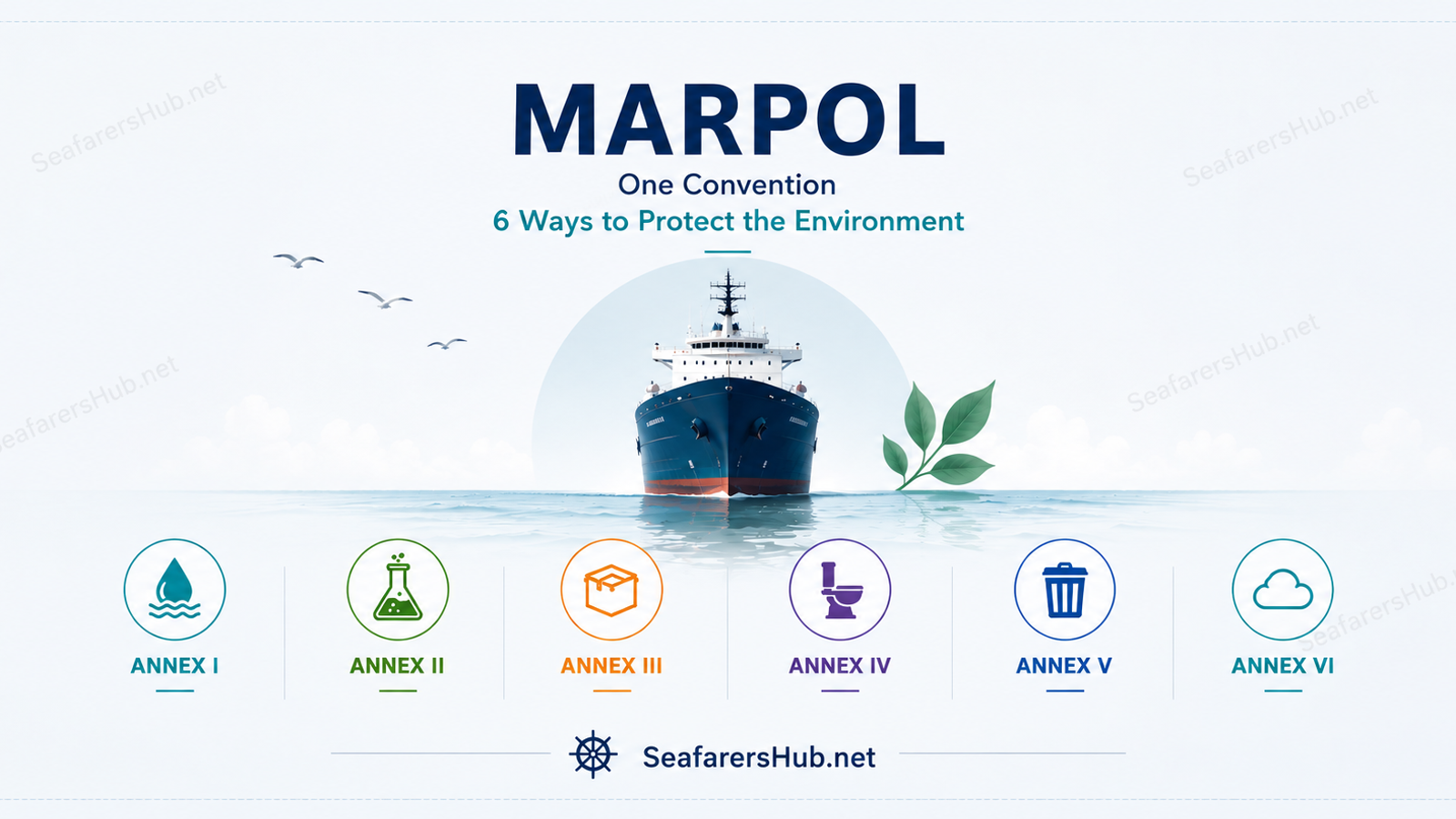
Learn More About: What Is MARPOL? Complete Guide to the Six Annexes | SeafarersHub
What Is a Harmful Substance?
Under Regulation 1 of MARPOL Annex III, harmful substances are those identified as marine pollutants in the IMDG Code, or substances that meet the criteria contained in the appendix to Annex III.
This connection with the IMDG Code is extremely important.
In practice, the IMDG Code provides much of the detailed technical framework for transporting these substances safely.
What Does “Packaged Form” Mean?
Annex III defines packaged form as the forms of containment specified for harmful substances in the IMDG Code.
This can include cargo transported in forms such as:
- Boxes and cartons
- Drums
- Intermediate bulk containers
- Portable tanks
- Freight containers
- Other approved packages or containment systems
The essential point is that Annex III deals with harmful substances carried in packaged form rather than in bulk.
Application of MARPOL Annex III
Regulation 2 establishes an important principle: