MARPOL Annex I Explained: A Guide to Its 11 Chapters
Shipping is a major environmental problem for oil pollution. However, oil pollution is not only caused by large spills from tankers but also by routine releases such as machinery-space bilges and oily residues. The main regulatory instrument addressing these concerns is MARPOL Annex I, which came into effect on 2 October 1983 and has been amended several times. Annex I requires the use of oily-water treatment equipment, proper handling of bilges and sludge and the maintenance of pollution-prevention equipment, illustrating the need for compliance in the day-to-day operation of vessels. Effective prevention of oil pollution by ships requires knowledge of Annex I.
Learn More About: What Is MARPOL? Complete Guide to the Six Annexes | SeafarersHub
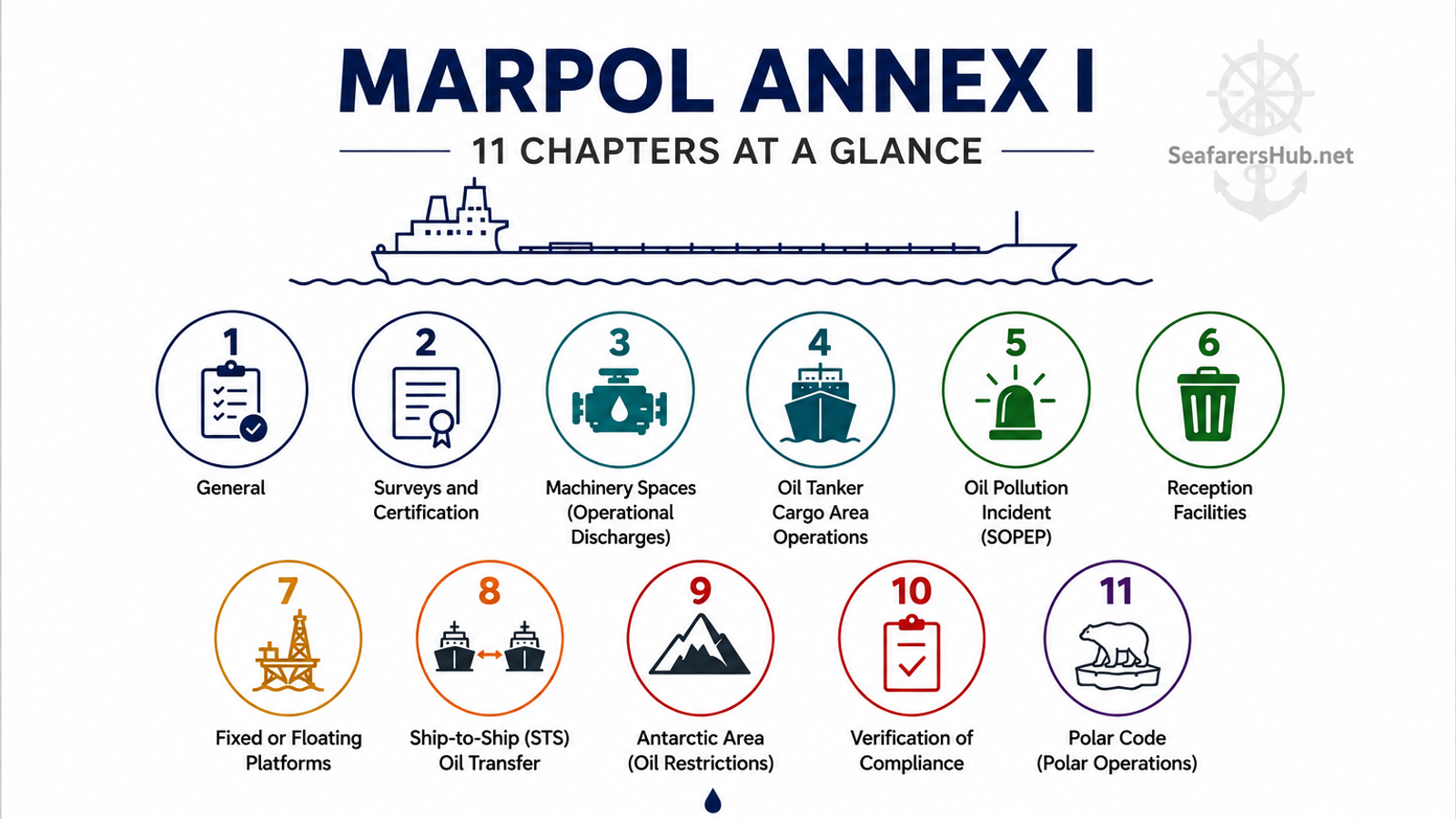
The 11 Chapters of MARPOL Annex I
MARPOL Annex I is divided into 11 chapters. They cooperate on general requirements, surveys and certification, pollution from machinery space, oil tanker operations, emergency preparedness, reception facilities, specialized operations and environmental protection in particularly sensitive areas of operation.
Chapter 1 – General
Chapter 1 establishes the foundation of Annex I, and It contains important definitions and explains how the Annex applies to ships. It is important to understand these definitions because terms such as oil, oily mixture, oil fuel, oil tanker and special area have specific regulatory meanings.
Chapter 2 – Surveys and Certification
Ships to which this applies shall be surveyed to verify that their structure, equipment, systems, arrangements and materials meet the requirements of Annex I.
One of the main documents that are the result of these requirements is: INTERNATIONAL OIL POLLUTION PREVENTION CERTIFICATE (IOPP)
For those on board ship the practical principle is simple:
The actual equipment and arrangements on board should conform to the approved certification and documentation of the ship.
Chapter 3 – Requirements for Machinery Spaces of All Ships
For marine engineers, Chapter 3 is the most operationally important part of Annex I.
It deals with pollution risks arising from machinery spaces and includes requirements relating to:
- oily residues (sludge);
- machinery-space bilges;