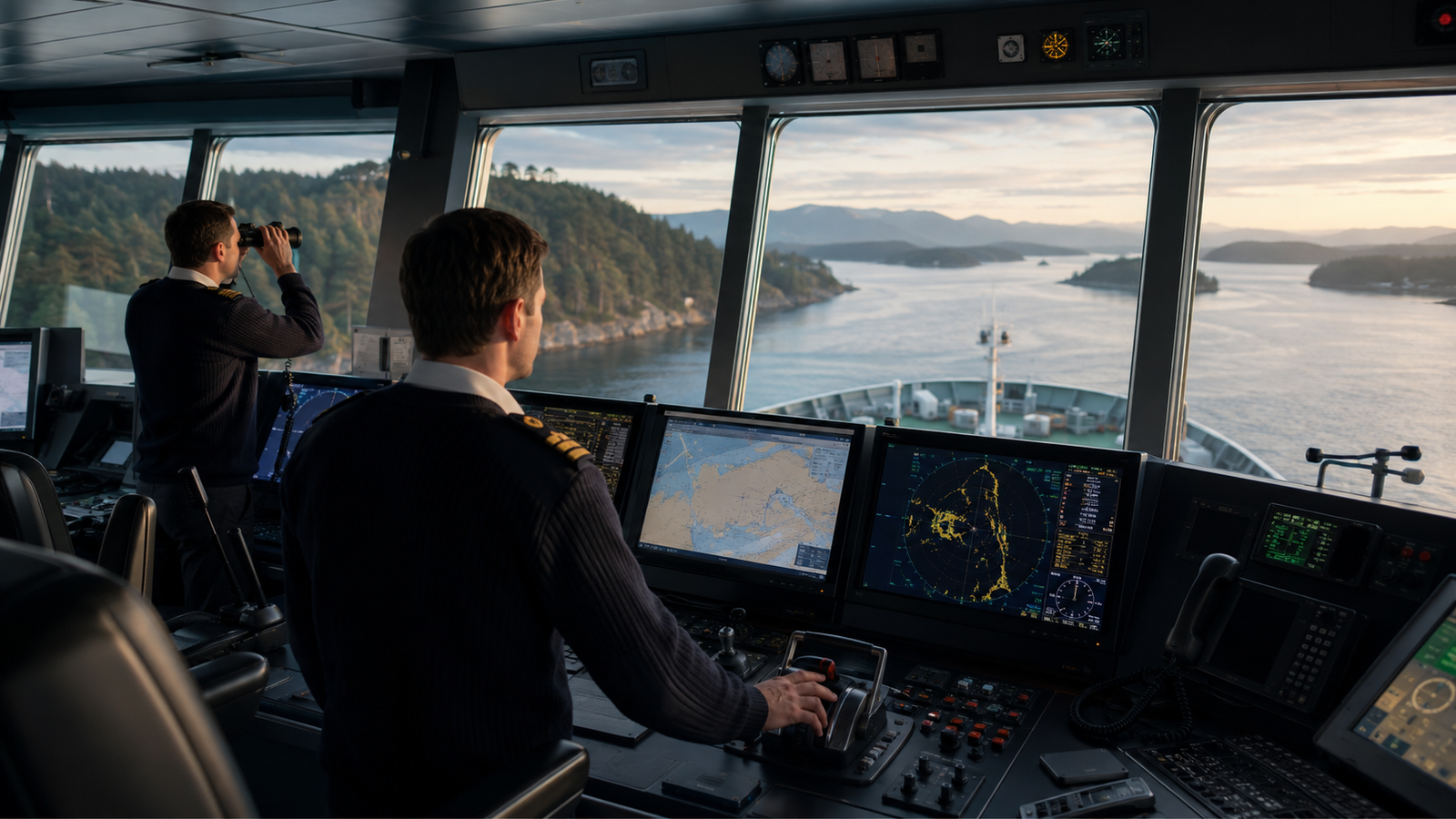
Safe navigation depends on more than bridge equipment or the competence of one officer. It requires international regulations, effective voyage planning, qualified watchkeepers, reliable navigational data, collision-avoidance decisions and dependable maritime communications.
The bridge, navigation systems and the Global Maritime Distress and Safety System (GMDSS) should therefore be treated as one connected safety framework. Failure in any part—such as poor lookout, incorrect ECDIS settings or missed safety information—can affect the entire voyage.
The main regulatory framework
Several international instruments govern bridge operations:
- SOLAS Chapter V covers safety of navigation, voyage planning, navigational equipment, routeing systems and navigational services.
- SOLAS Chapter IV establishes GMDSS radiocommunication requirements.
- COLREG provides the rules for preventing collisions at sea.
- STCW establishes competence, certification and watchkeeping standards for masters, officers, ratings and radio personnel.
These requirements are implemented onboard through the vessel’s Safety Management System, bridge procedures, Master’s standing orders, company navigation policies and equipment manuals.
A company procedure may impose stricter controls than the international minimum, but it should not be confused with a statutory requirement.
Voyage planning and watchkeeping
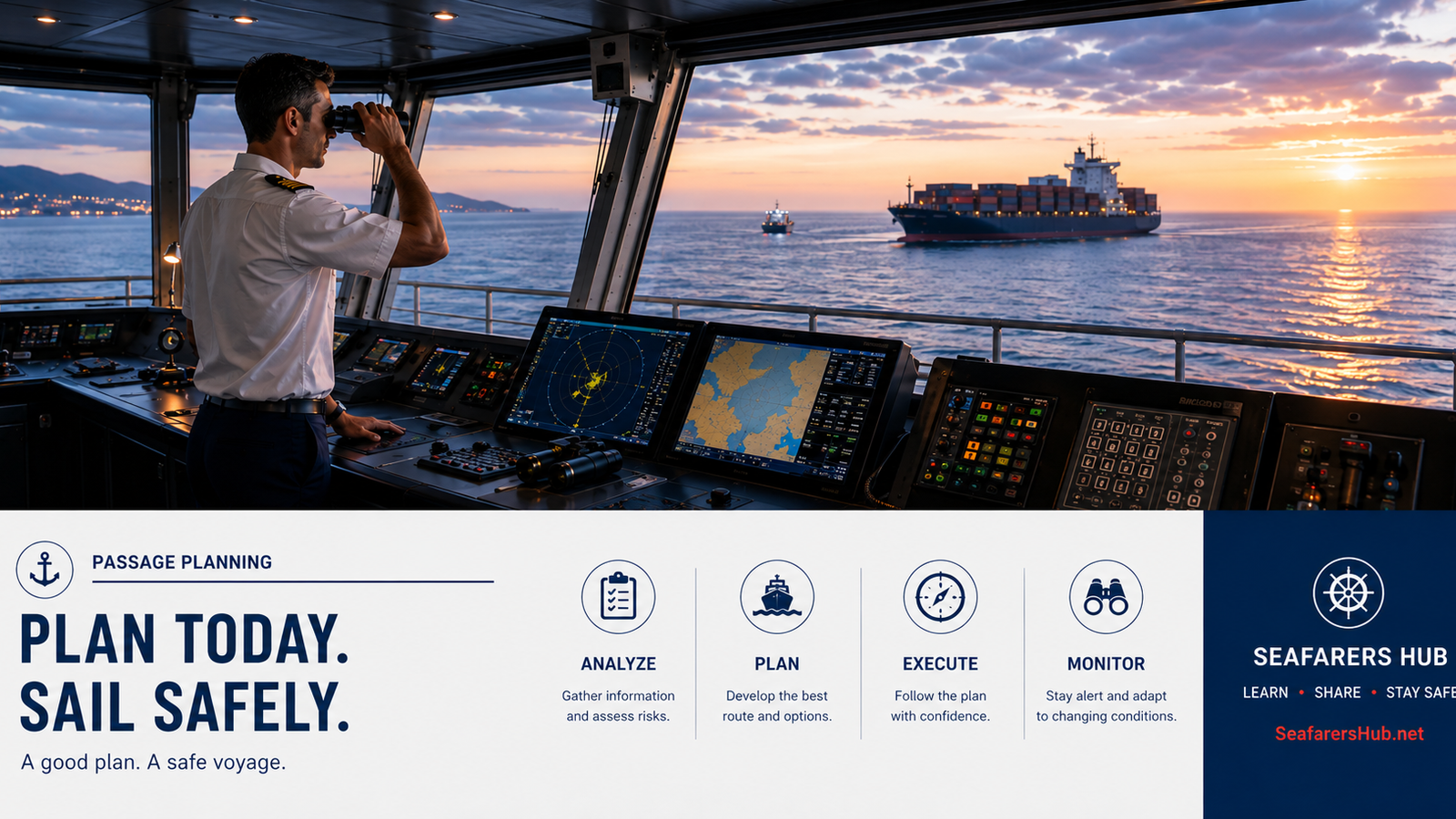
A safe voyage begins with a complete berth-to-berth passage plan. The plan should consider:
- Navigational hazards
- Chart reliability
- Under-keel clearance
- Weather, tides and currents
- Traffic-separation schemes
- Reporting requirements
- Pilotage arrangements
- Abort points and contingency anchorages
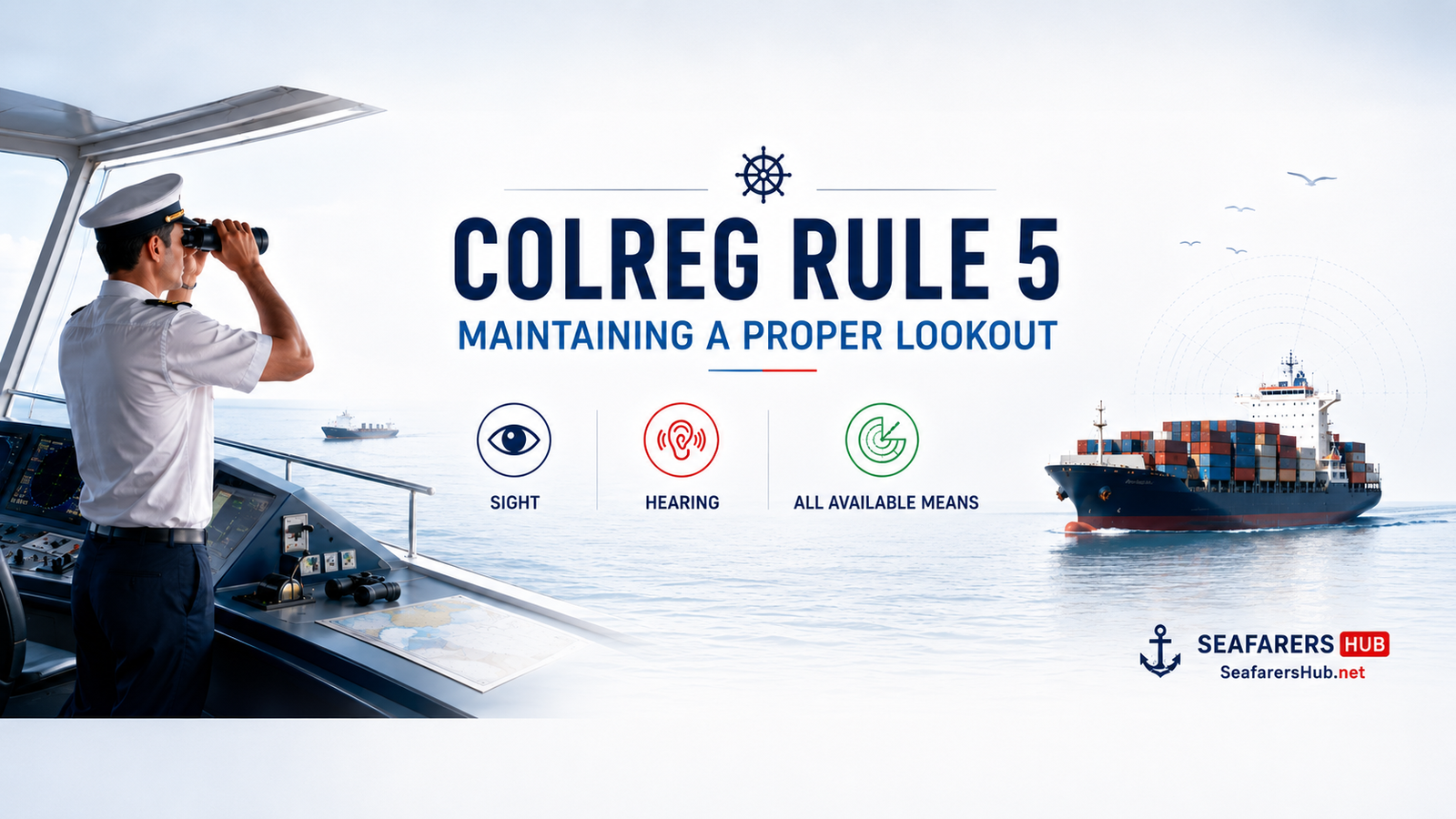
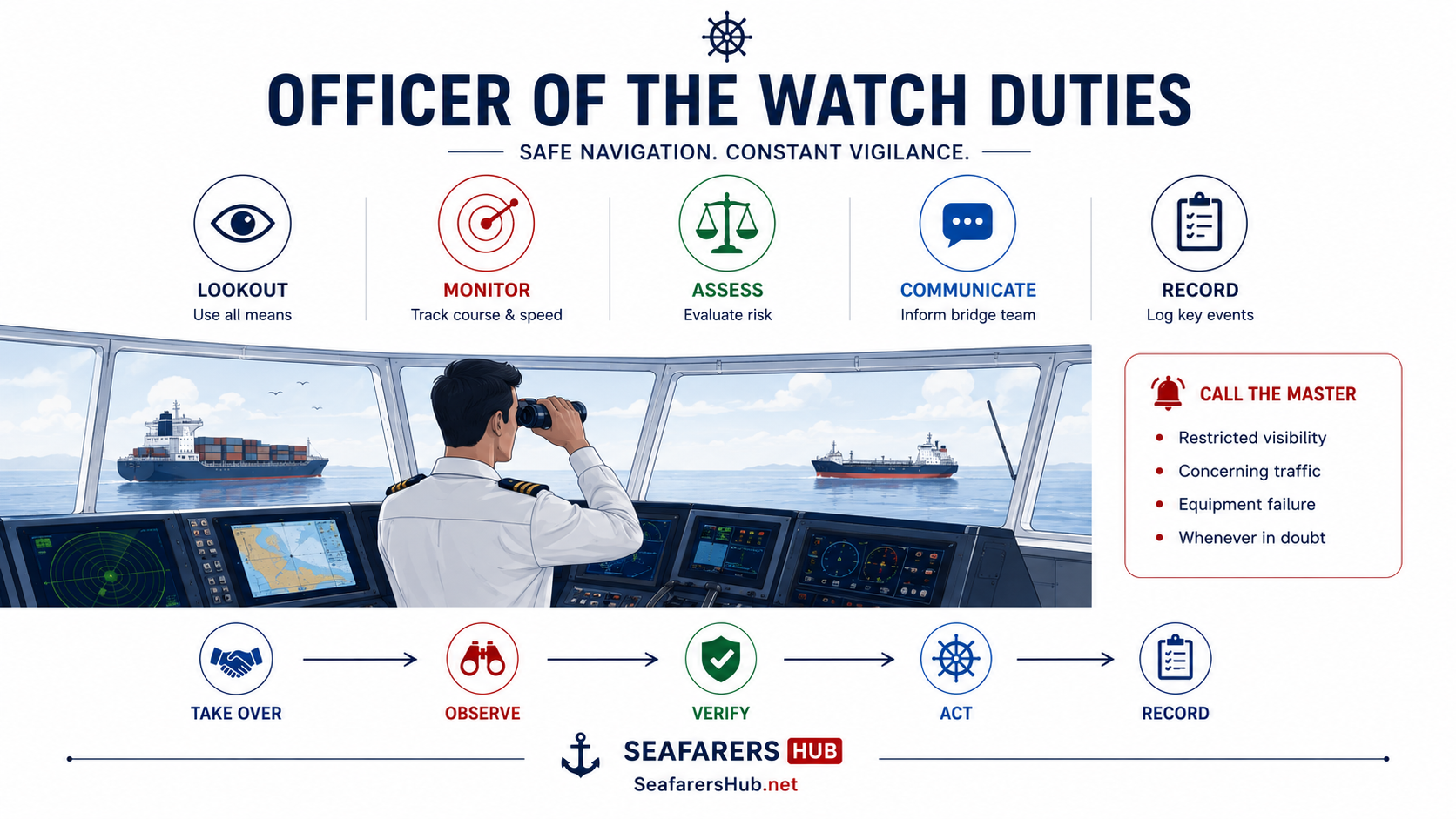
During the voyage, the Officer of the Watch must continuously monitor the ship’s progress and maintain situational awareness.
This requires the combined use of visual lookout, radar, ARPA, ECDIS, AIS, GNSS, compasses, echo sounder and available weather or traffic information.