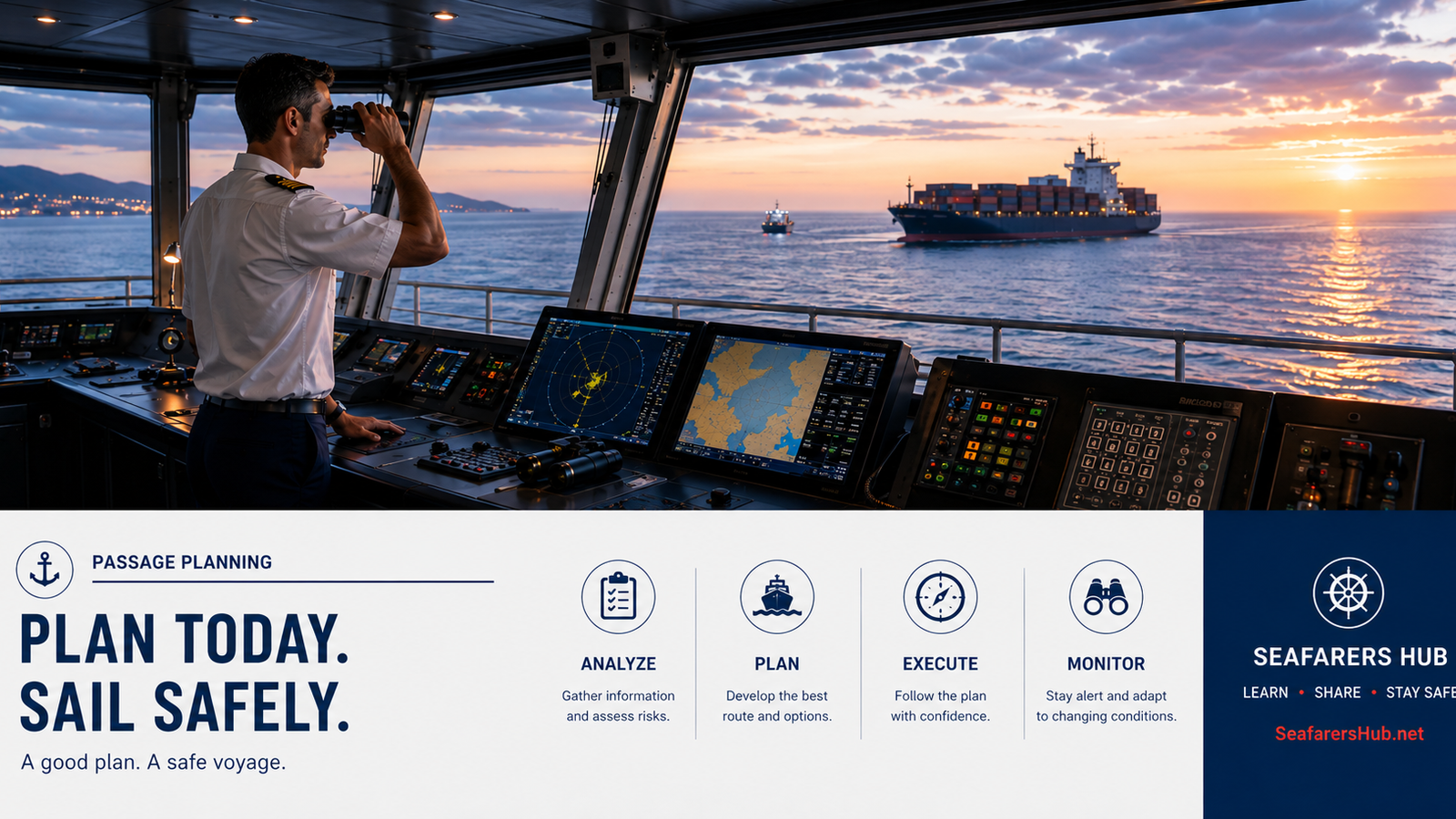
Berth-to-berth passage planning is one of the most important navigational safety controls on board a ship. It is not simply the act of drawing a route on a chart or entering waypoints into ECDIS. It is a structured process through which the bridge team studies the intended voyage, identifies risks, develops a safe route, prepares for expected and unexpected conditions, and then monitors the vessel continuously from departure berth to arrival berth.
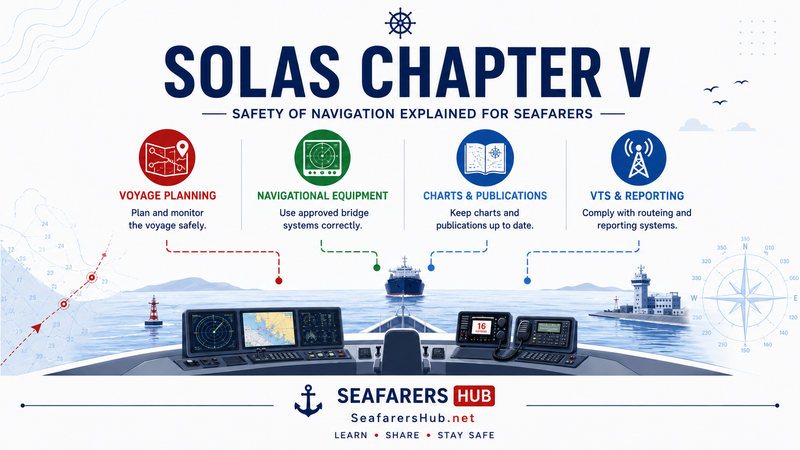
The legal and operational foundation of voyage planning is found in SOLAS Chapter V, Regulation 34, which requires that prior to proceeding to sea, the Master ensure that the intended voyage has been planned using appropriate nautical charts and nautical publications, taking into account IMO guidelines. Those guidelines are set out in IMO Resolution A.893(21) – Guidelines for Voyage Planning, which organizes passage planning into four stages: appraisal, planning, execution, and monitoring.
In professional practice, berth-to-berth planning is not a paperwork exercise. It is a decision-making process that connects charts, ECDIS, tides, weather, under-keel clearance, routeing systems, pilotage, traffic, bridge-team readiness and contingency thinking into one navigational safety framework.
Why “Berth-to-Berth” Matters
The term berth-to-berth is important because a voyage does not begin at the fairway buoy and does not end when the pilot boards. Risks exist during:
- unberthing,
- confined-water navigation,
- pilotage,
- coastal and ocean passages,
- traffic-separation schemes,
- approach channels,
- anchorages,
- and berthing.
A weak plan often focuses only on the sea passage and neglects the highest-risk areas, which are usually departure, arrival and restricted waters. A proper berth-to-berth plan covers the entire route, including pilot boarding grounds, wheel-over positions, no-go areas, reporting points, contingency anchorages, tug arrangements, expected under-keel-clearance limits and the final approach to berth.
The Regulatory and Professional Framework
SOLAS V/34 makes the Master responsible for ensuring that the intended voyage is planned before proceeding to sea. The voyage plan must identify a route that: