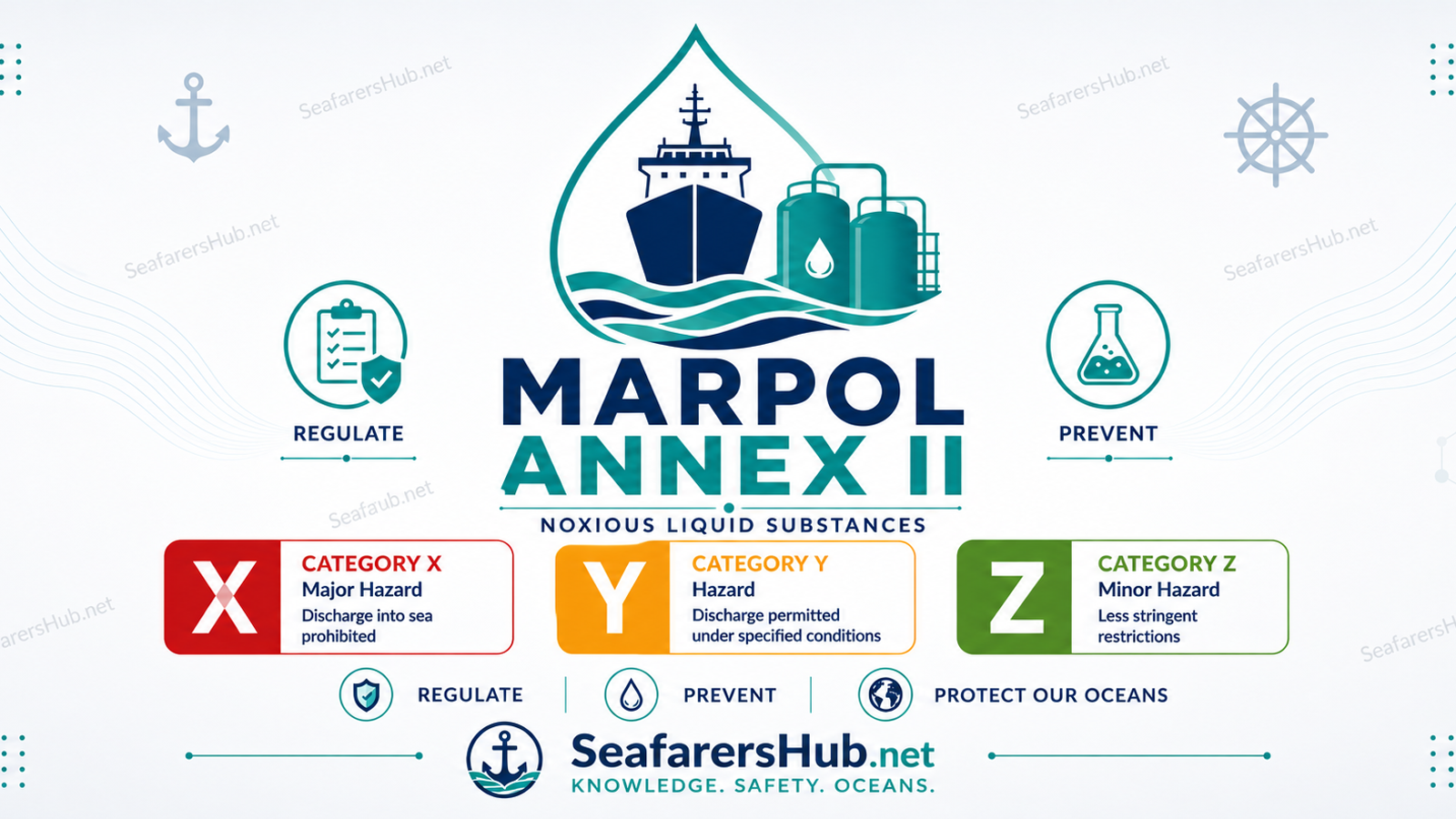
MARPOL Annex II Explained: A Practical Guide to Noxious Liquid Substances
While MARPOL Annex I focuses on pollution by oil, MARPOL Annex II regulates pollution by noxious liquid substances (NLS) carried in bulk. These substances are commonly associated with chemical tanker operations and can present different levels of hazard to marine resources, human health and other legitimate uses of the sea.
For seafarers, Annex II is particularly important during cargo unloading, stripping, tank cleaning, prewashing, disposal of residues and record keeping. Understanding the relationship between the cargo's pollution category and the required shipboard procedures is therefore essential.
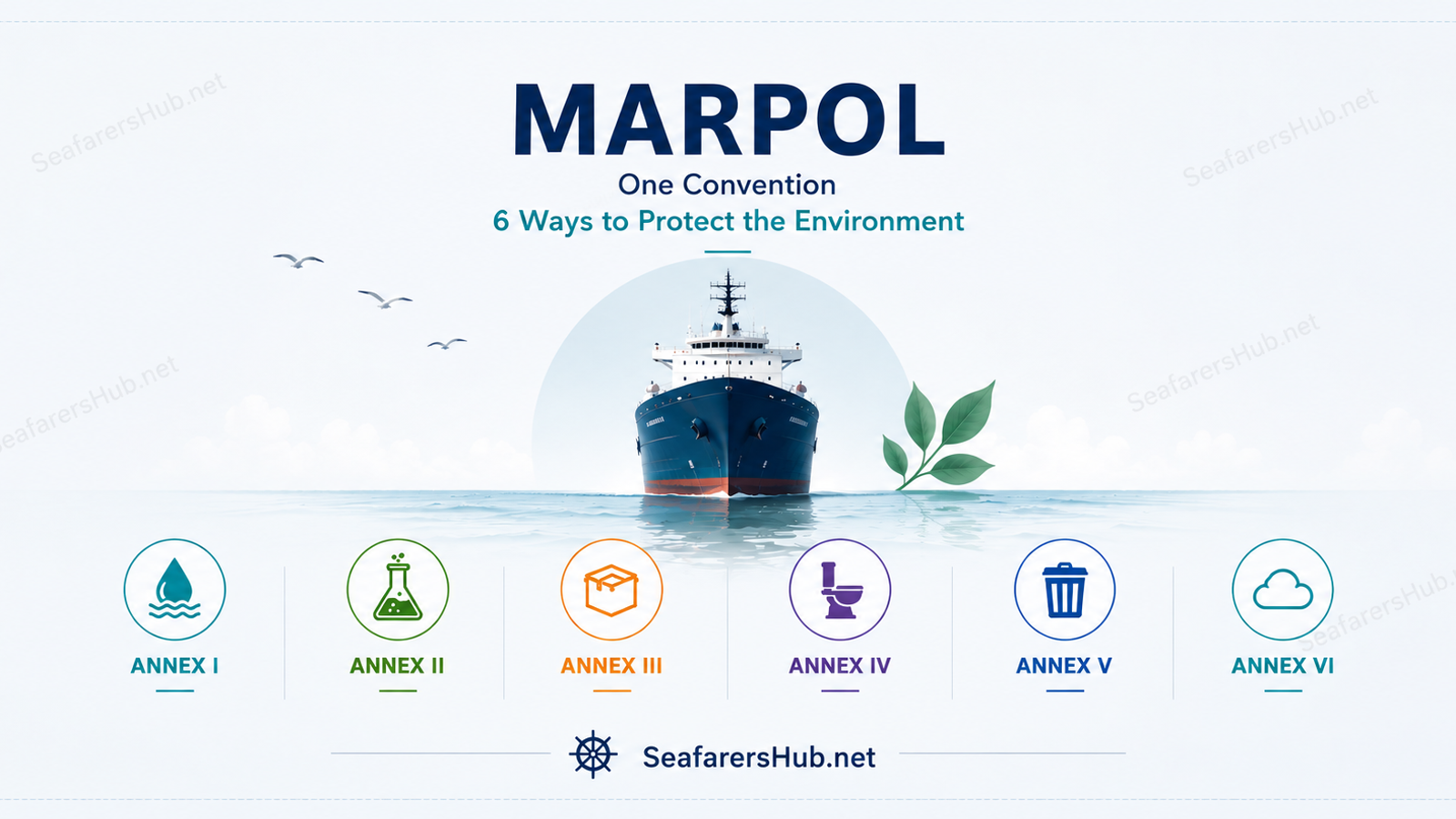
Learn More About: What Is MARPOL? Complete Guide to the Six Annexes | SeafarersHub
What Are Noxious Liquid Substances (NLS)?
Noxious liquid substances are liquid substances carried in bulk that are subject to the pollution-control requirements of MARPOL Annex II.
Unlike oil pollution, Annex II deals with many different chemical products whose environmental effects can vary considerably. IMO's system therefore categorizes substances according to the hazard they present when residues from tank cleaning or deballasting operations enter the marine environment.
This categorization leads to one of the most important concepts in Annex II:
Categories X, Y and Z
Category X: Major Hazard (highest level of pollution concern)
Category X includes NLS that are considered to present a major hazard to marine resources or human health if discharged into the sea from tank cleaning or deballasting operations.
Consequently, the discharge of these substances into the marine environment is prohibited, requiring stringent controls over residues and tank-washing operations.
Category Y: Hazard (Minor Hazard)
Category Y substances present a hazard to marine resources or human health or may cause harm to amenities or other legitimate uses of the sea.
Their discharge is therefore subject to restrictions on the quality and quantity of the discharge into the marine environment.
Category Z: Minor Hazard (lower pollution hazard)
Category Z substances are considered to present a minor hazard to marine resources or human health.