What Is MARPOL Annex V? A Guide to Garbage Pollution from Ships
What Is MARPOL Annex V?
MARPOL Annex V contains the international requirements for the prevention of pollution by garbage from ships.
Unlike some other MARPOL Annexes, Annex V generally applies to all ships. Its basic principle is simple: the discharge of garbage into the sea is prohibited unless specifically permitted by the Annex.
What Is Considered Garbage?
Annex V covers several types of ship-generated garbage, including:
- Food wastes
- Domestic wastes
- Operational wastes
- Plastics
- Cargo residues
- Cooking oil
- Incinerator ashes
- Fishing gear
- Animal carcasses
One of the most important rules is:
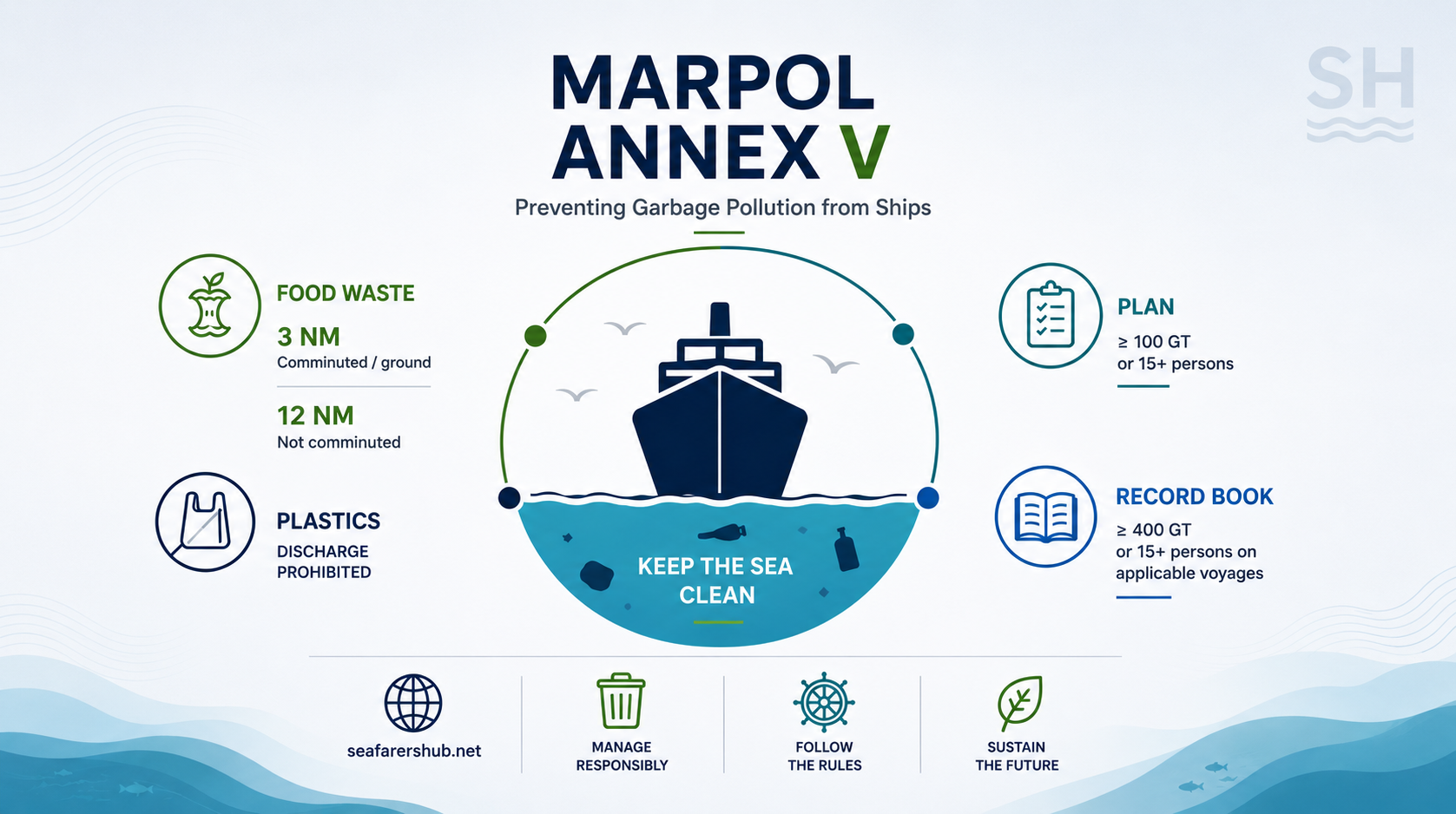
Plastics → discharge into the sea is prohibited.
This includes plastic bags, synthetic ropes, synthetic fishing nets and other plastic products.
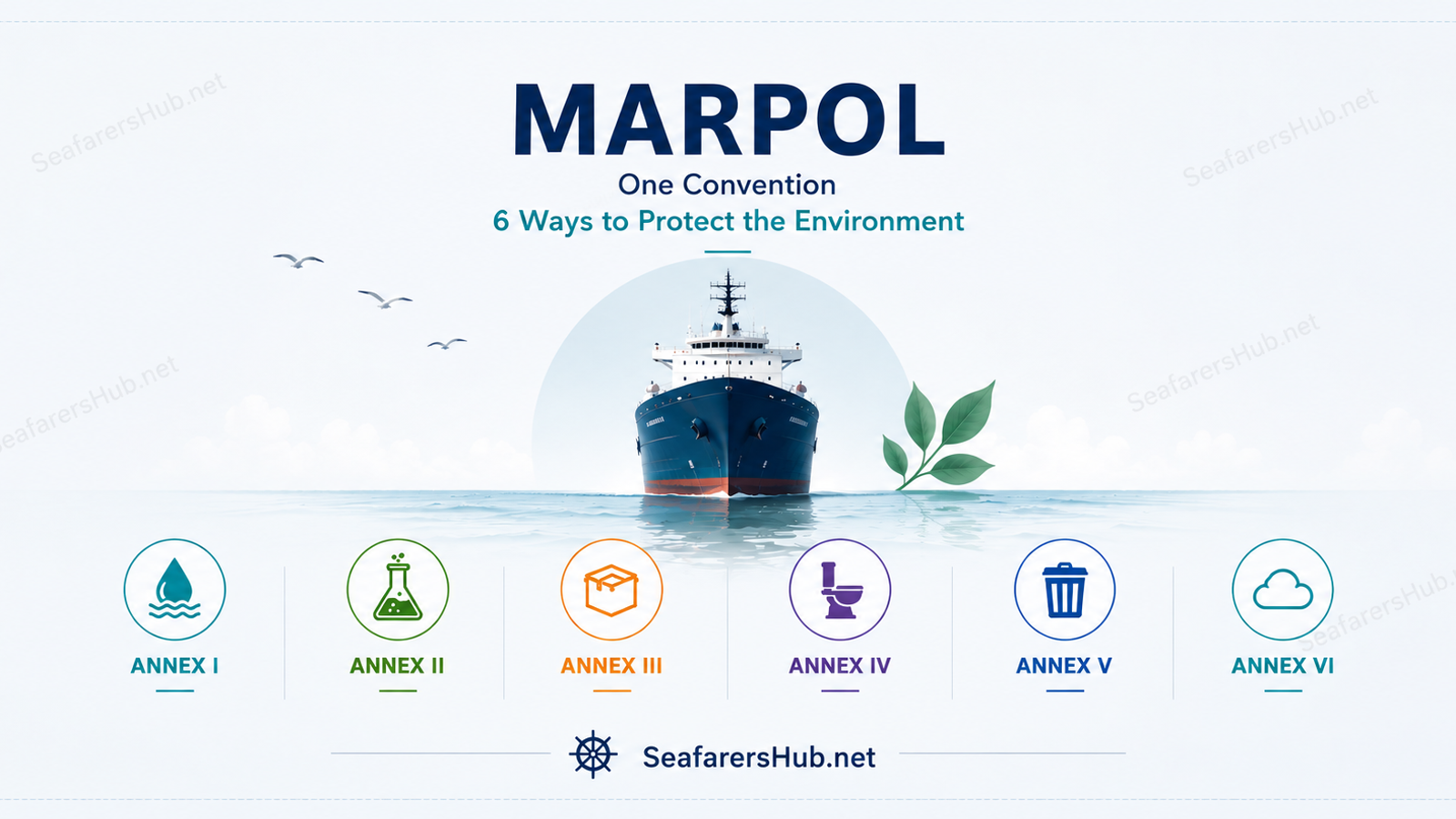
Learn More About: What Is MARPOL? Complete Guide to the Six Annexes | SeafarersHub
Discharge Outside Special Areas
Regulation 4 establishes the main requirements for garbage discharge outside special areas.
1. For food waste Comminuted or ground food waste → at least 3 NM from nearest land. The waste must be capable of passing through a screen with openings no greater than 25 mm.
2. Food waste not comminuted or ground → at least 12 NM from nearest land. The ship must also be en route.
Certain cargo residues that are not harmful to the marine environment may be discharged at least 12 NM from the nearest land when the applicable conditions are satisfied.
Discharge Within Special Areas
Regulation 6 establishes stricter requirements within special areas.
Food waste may generally be discharged only when:
- The ship is en route;