Emergency Escape Arrangements on Ships: SOLAS Requirements Explained
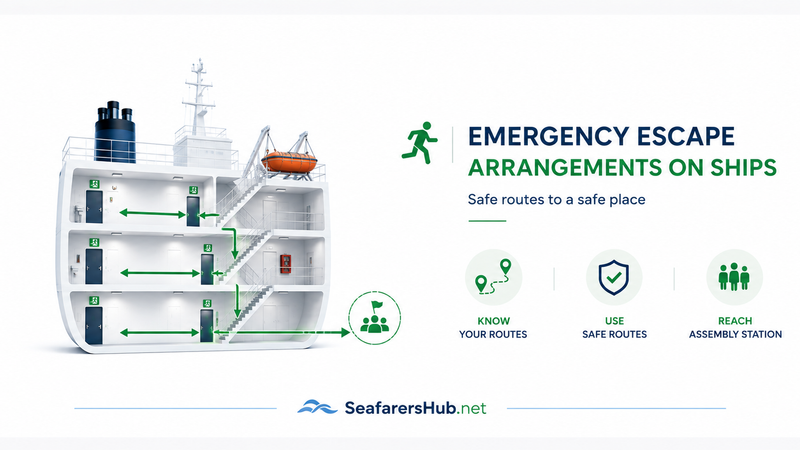
During a fire or other emergency, crew members and passengers must be able to leave affected spaces quickly and reach a safe area. Shipboard escape arrangements are therefore designed to provide safe and readily accessible routes away from danger.
The principal requirements are contained in SOLAS Chapter II-2, Regulation 13 – Means of Escape.
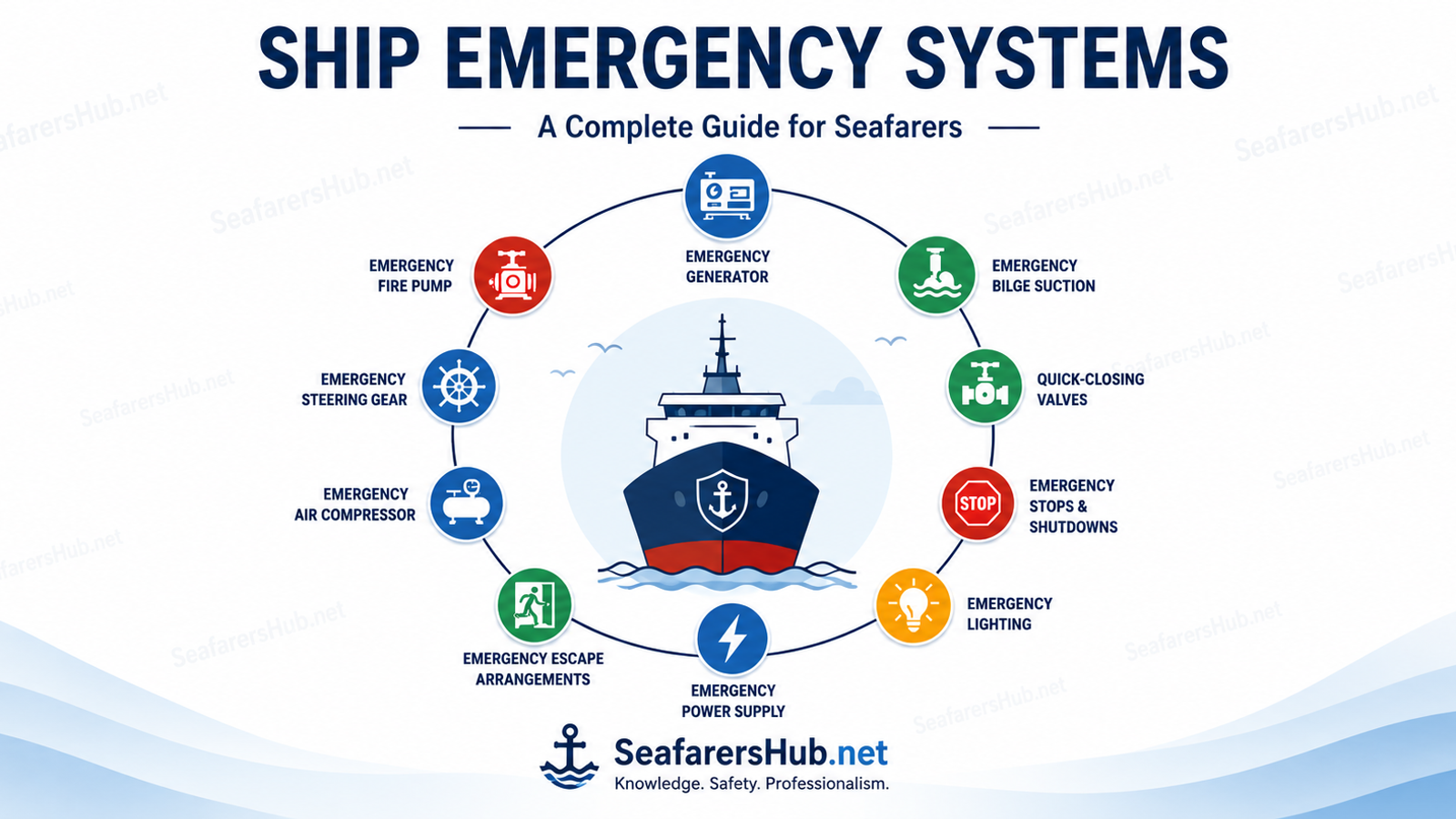
learn more about: Ship Emergency Systems: A Complete Guide for Seafarers | SeafarersHub
What Are Emergency Escape Arrangements?
Emergency escape arrangements include the routes and structural features that allow people to leave machinery spaces, accommodation spaces, control stations and other applicable areas during an emergency.
Depending on the ship and space, these may include:
- stairways and ladders;
- doors and passageways;
- protected escape routes;
- access to open decks; and
- Emergency Escape Breathing Devices (EEBDs).
The exact arrangement depends on the ship type, space, construction date and applicable SOLAS requirements.
The Basic SOLAS Principle
SOLAS requires safe escape routes so that persons onboard can safely and swiftly reach the lifeboat and liferaft embarkation deck.
Two means of escape are required from many spaces, particularly machinery spaces, but this should not be interpreted as meaning that every space on every ship must always have two escape routes. SOLAS provides specific alternatives and exceptions depending on the space and ship concerned.
Escape from Machinery Spaces
Machinery spaces require particular attention because fire, smoke and heat can rapidly make a normal access route unsafe.
For cargo ships, SOLAS II-2/13.4.2 generally requires two means of escape from each machinery space of Category A, subject to the alternatives and exceptions specified in the regulation.
What Is a Machinery Space of Category A?